
Nowadays, everyone talks about chakras. They are associated with rainbow colors, crystals, and New Age therapies. But that is far from the original view of the Vedic tradition and classical Yoga texts. To understand them properly, go back to the sources: Upaniṣads, Tantric texts, Haṭha Yoga.
What Chakras Really Are
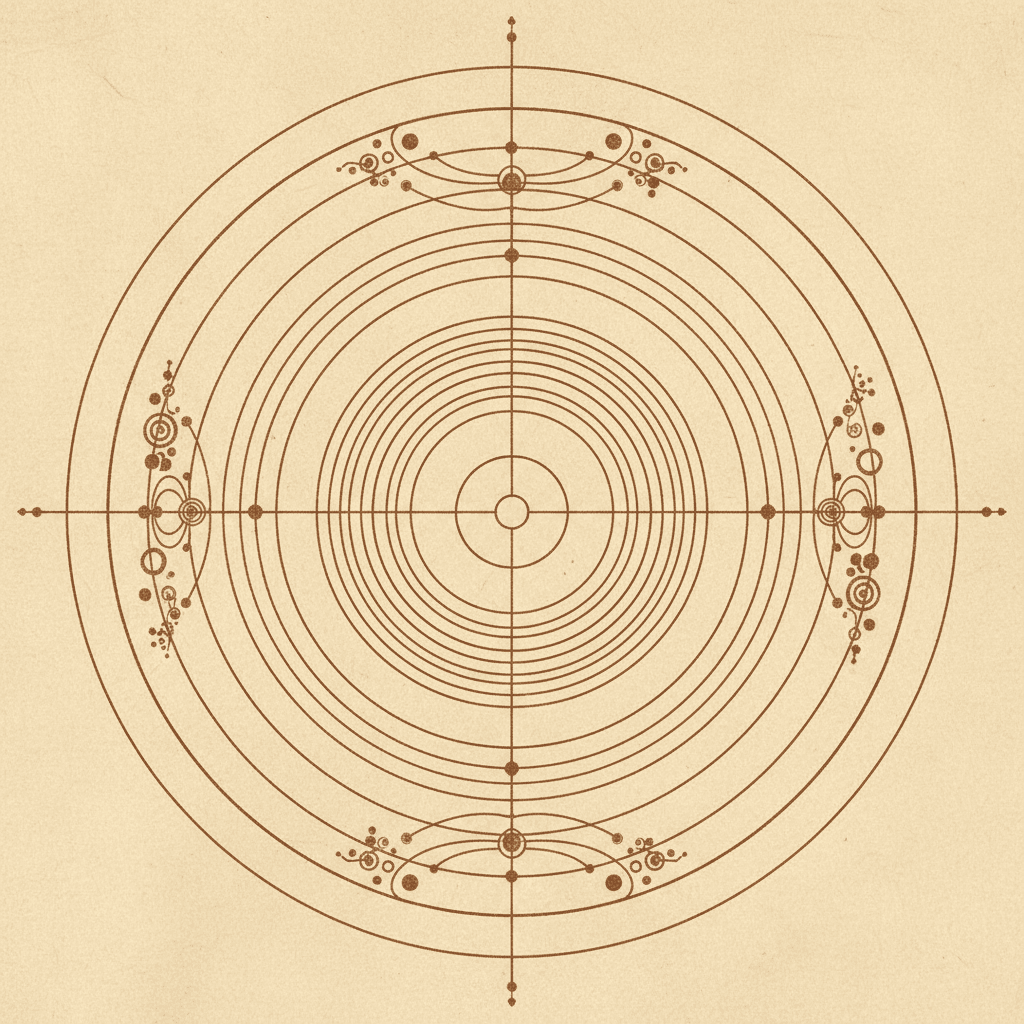
Chakra means "wheel" in Sanskrit. In the yogic tradition, chakras are centers of prāṇa (vital energy) located along the suṣumnā nāḍī -- the central energy channel running along the spine.
They are not physical organs. They are part of the subtle body (sūkṣma śarīra) and can only be directly perceived through advanced yogic practice.
The Six Main Chakras
### 1. Mūlādhāra (Root) Located at the base of the spine. Associated with earth element, stability, and survival. Where kuṇḍalinī śakti rests in latent form.
### 2. Svādhiṣṭhāna (Sacral) Below the navel. Water element. Associated with procreation, creativity, and emotional flow.
### 3. Maṇipūra (Solar Plexus) At the navel center. Fire element. Will, determination, and personal power.
### 4. Anāhata (Heart) At the heart center. Air element. Love, compassion, and the seat of the individual self (jīvātman).
### 5. Viśuddha (Throat) At the throat. Space element. Communication, expression, and purification.
### 6. Ājñā (Third Eye) Between the eyebrows. Beyond elements. The command center where the three main nāḍīs (iḍā, piṅgalā, suṣumnā) converge. The seat of intuition and higher discernment.
Above these six is Sahasrāra -- the "thousand-petaled lotus" at the crown. Technically not a chakra but the destination where kuṇḍalinī merges with pure consciousness.
The Three Granthis (Knots)
Along the path, three knots (granthis) must be pierced for kuṇḍalinī to ascend:
- Brahma Granthi (mūlādhāra area): Attachment to the physical body and material security
- Viṣṇu Granthi (anāhata area): Attachment to emotional bonds and personal relationships
- Rudra Granthi (ājñā area): Attachment to intellectual achievements and subtle powers
Each granthi represents a level of identification that must be transcended for spiritual evolution.
What the Tradition Says vs. Modern Distortions
### Colors The popular rainbow color system (red, orange, yellow, green, blue, indigo, violet) was largely introduced in the 20th century by Western authors. Traditional texts describe colors, but they differ across sources and are not the simple rainbow sequence.
### Healing The idea that you can "heal" or "open" a chakra through crystals, essential oils, or specific foods has no basis in traditional literature. Chakra work in the authentic tradition involves prāṇāyāma, bandhas, mudrās, mantra, and meditation -- under the guidance of a qualified teacher.
### Psychological Mapping Mapping chakras onto psychological states (first chakra = safety issues, second = sexuality issues, etc.) is a modern Western overlay. It can be useful as a metaphor but should not be confused with the traditional system.
The Vedāntic Perspective
From the standpoint of Vedānta, the chakra system belongs to the subtle body -- which is part of what you are NOT. Ātman (your true self) is beyond all bodies, all energies, all chakras.
The chakra system is a map of the journey of the limited self (jīva) toward recognition of its unlimited nature. It is a valid and useful map. But the destination is beyond the map itself.
Want to study Vedanta in depth?
Join a Study Group →