
Forgiveness is often misunderstood as weakness or condescension. In Vedānta, forgiveness (*kṣamā*) is one of the most refined virtues, based not on sentimentalism, but on clear understanding of reality. To truly forgive is an act of wisdom, not emotion.

What Forgiveness is NOT
Before understanding authentic forgiveness, it's important to clarify common misconceptions:
Forgiveness is not: - Forgetting or denying what happened - Allowing destructive behaviors to continue - Suppressing legitimate anger or hurt - Being naive about human nature - Giving up healthy boundaries
Genuine forgiveness preserves discernment (*viveka*) while dissolving the resentment that imprisons the forgiver.
The Vedantic Basis of Forgiveness
### 1. The Law of Karma


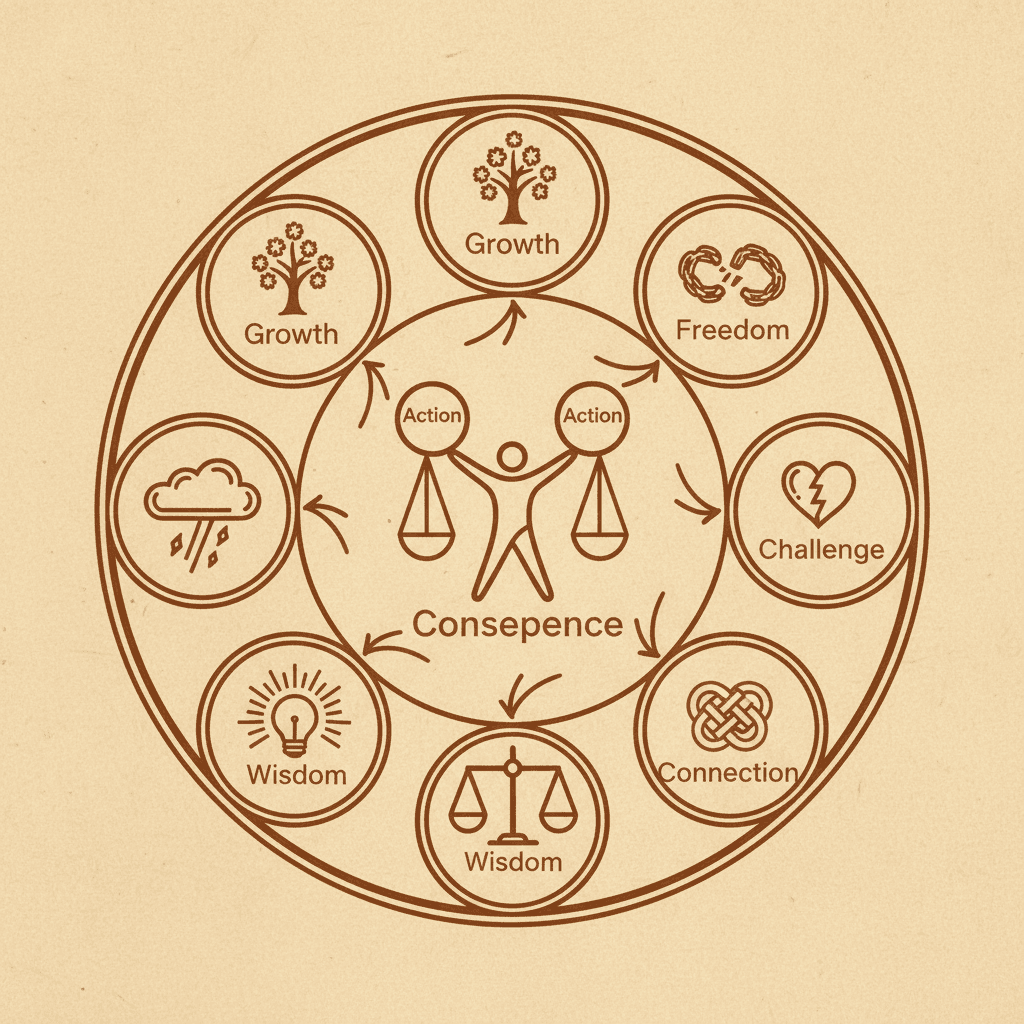
Vedānta teaches that every action generates appropriate consequences (*karma-phala*). When someone harms us, two laws operate simultaneously:
For the one who caused harm: The negative karma generated will return naturally, teaching through experience.
For the one who received harm: The reaction of anger and resentment creates additional karma, perpetuating the cycle of suffering.
Understanding this allows us to release the need to "do justice" - life itself takes care of this.
### 2. The Nature of Ignorance (*Avidyā*)
According to Vedānta, all harmful action is born from ignorance about the true nature of reality. Whoever causes harm is identified with limitations (body, mind, ego) and acts from this fragmented perspective.
Knowing this truth, we develop natural compassion. As Christ said: "Forgive them, for they know not what they do."
### 3. Fundamental Unity
At the deepest level, there is no separate "I" and "other." There is a single consciousness manifested through apparently different forms. Resentment maintains the illusion of separation; forgiveness reveals the underlying unity.
How to Cultivate Authentic Forgiveness
### 1. Intellectual Understanding (*Parokṣa Jñāna*)
Study the principles: - Law of karma and its implications - Nature of ignorance and its manifestations - Unity of consciousness beyond forms - Temporality of all experiences
### 2. Reflective Contemplation (*Manana*)
Questions for reflection: - "What is this situation teaching me about attachment?" - "How is my reaction creating additional suffering?" - "What is my responsibility in this dynamic?" - "What remains when I release this resentment?"
### 3. Transformative Practices
Practice of Compassion (*Karuṇā*): Contemplate that whoever caused harm also suffers the consequences of their actions.
Practice of Equanimity (*Upekṣā*): Develop the capacity to observe situations without intense emotional reactivity.
Practice of Gratitude: Find aspects to be grateful for, even in difficult situations.
Gradual Methodology for Forgiveness
### Stage 1: Recognition Honestly recognize the hurt without minimizing or dramatizing it.
### Stage 2: Understanding Study the relevant Vedantic principles until they make intellectual sense.
### Stage 3: Contemplation Apply this understanding to the specific situation through consistent reflection.
### Stage 4: Practice Cultivate attitudes and actions aligned with this understanding.
### Stage 5: Integration Forgiveness becomes natural, no longer a conscious effort.
Self-Forgiveness
Often, the most difficult person to forgive is ourselves. Vedānta offers a unique perspective:
### The Nature of Mistakes
All mistakes are born from mistaken identification and temporary ignorance. The "I" that made the mistake was limited by the understanding of that time. The current "I," with greater understanding, would naturally not repeat the same patterns.
### Learning vs. Punishment
The purpose of a mistake is learning, not eternal punishment. When the lesson is integrated, the mistake has fulfilled its evolutionary function.
### The Unchanging Nature of the Self
Essentially, you were never a "sinner" or "guilty." These are temporary identifications of the mind. Your fundamental nature remains pure and untouched.
Forgiveness in Relationships
### When Forgiveness Doesn't Mean Reconciliation
Internal forgiveness can happen independently of external reconciliation. Some situations require:
Forgiveness with Distance: Releasing resentment while maintaining appropriate boundaries.
Forgiveness with Caution: Understanding without returning to previous naiveté.
Forgiveness with Clarity: Distinguishing between the essential person and destructive behavioral patterns.
The Transformative Power of Forgiveness
### Personal Benefits - Liberation of psychic energy imprisoned in resentment - Improvement in physical and mental health - Greater capacity to love and trust - Growth in wisdom and compassion
### Relational Benefits - Breaking cycles of retaliation - Creating space for mutual growth - Modeling spiritual maturity - Possibility of genuine healing
When to Seek Support
Some situations require additional support: - Deep traumas that affect daily functioning - Repetitive patterns of abuse - Difficulty establishing healthy boundaries - Issues involving physical safety
In these cases, combining Vedantic teachings with qualified therapy may be the wisest approach.
Forgiveness as Gateway to Freedom
Authentic forgiveness is simultaneously means and result of wisdom. As means, it purifies the heart and clears the mind. As result, it arises naturally when we understand our true nature.
It's not about "being nice," but about being free. Free from the weight of the past, free from the need for others to be different than they are, free to live from wisdom instead of reactivity.
Conclusion
Forgiveness in Vedānta is not moral obligation, but natural understanding. When we see clearly the law of karma, the nature of ignorance, and the fundamental unity of existence, forgiveness happens as a consequence of this vision.
The greatest forgiveness is recognizing that, at the deepest level, there was never anything to forgive. There is only consciousness expressed through apparently different forms, learning about itself through all experiences.
*To explore these teachings with traditional guidance, join the [Vedānta courses](/) where we systematically study this ancient wisdom.*
Want to study Vedanta in depth?
Join a Study Group →