
Everything that has a beginning has an end -- and the peace you seek lies in discovering what in you never began and never ends.
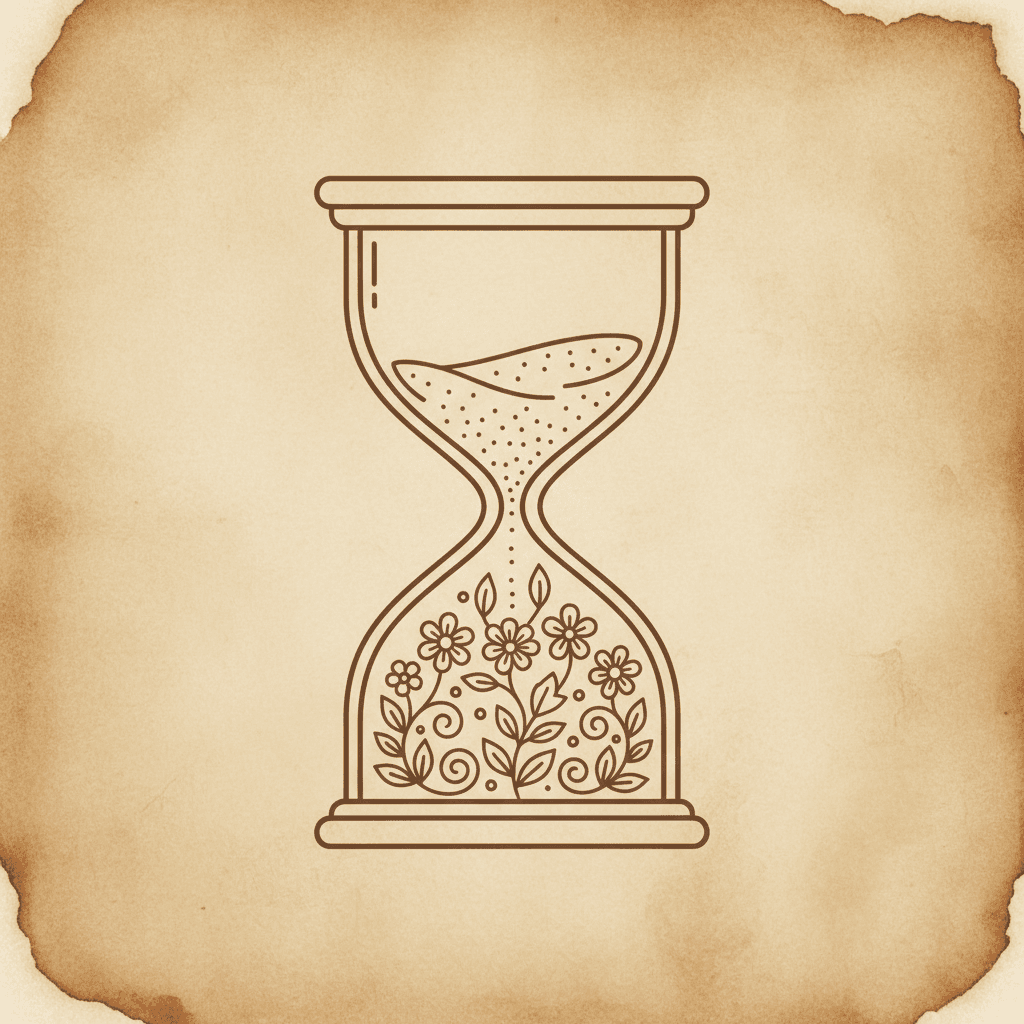
This is perhaps the most obvious truth of life -- and the one we resist most. We know everything changes. We see seasons pass, people age, cycles complete. And yet, we live as if things would last forever. When change arrives, it catches us off guard.
The problem isn't change
Most approaches to impermanence focus on "accepting change." And that's useful -- to a point. But the [Vedānta](/blog/o-que-e-vedanta) tradition goes deeper. The problem isn't change. The problem is that you placed your identity in something that changes.
If I identify with my body -- and the body ages -- I suffer. If I identify with my role -- and the role changes -- I enter crisis. If I identify with a relationship -- and it ends -- I crumble.
Suffering doesn't come from change. It comes from being identified with what changes.
Anitya: impermanence in Sanskrit
Tradition uses the term anitya -- "non-permanent" -- to describe everything that is composed, has cause, depends on conditions. And the conclusion is direct: everything perceived is anitya.
The body: anitya. Emotions: anitya. Thoughts: anitya. Relationships: anitya. Health: anitya. Money: anitya. Fame: anitya.
This isn't pessimism. It's precise description of reality. And tradition doesn't stop there -- because there is something that is nitya (permanent).
Nitya: what doesn't change
If everything you perceive changes, who perceives? If thoughts come and go, who knows they came and went?
This is the heart of Vedānta's teaching: [ātman](/blog/atman-brahman-diferenca) -- the consciousness that witnesses all change -- is nitya. It is not born, doesn't die, doesn't age, doesn't get sick.
In the [Bhagavad Gītā](/blog/bhagavad-gita-guia-completo), Kṛṣṇa teaches:
nainaṃ chindanti śastrāṇi nainaṃ dahati pāvakaḥ (2.23)
"Weapons do not cut it, fire does not burn it."
He's not talking about the body -- he's talking about ātman. The essence that you are is untouched by impermanence.

Three ways of coping (and one that actually works)
### 1. Denying change
"This won't change." "It's different for me." This strategy works until reality imposes itself -- and when it does, the impact is greater because you weren't prepared.
### 2. Clinging to the present
"I'll savor every moment!" Sounds healthy, but frequently it's anxiety disguised as gratitude. The person is so aware it will end that they can't relax.
### 3. Resigning yourself
"Everything will end anyway, so whatever." Pure tamas. Giving up masquerading as wisdom.
### 4. Discovering what doesn't change
This is Vedānta's proposal. Not denying change, not clinging to the present, not giving up. But investigating: what in me is permanent?
When this investigation happens -- with [study](/blog/como-estudar-vedanta-iniciante), reflection, and guidance from a [teacher](/blog/por-que-precisamos-de-guru-vedanta) -- the relationship with impermanence changes radically.
You don't become indifferent to change. You continue feeling, living, caring. But your identity is not in what changes. It is in what witnesses the change.
Viveka: the fundamental instrument
[Viveka](/blog/viveka-discernimento-vedanta) -- discernment -- is the ability to distinguish between nitya (permanent) and anitya (impermanent). It's not an abstract concept. It's a daily practice.
Every time something changes and you suffer, viveka asks: "What changed? What didn't?"
The job changed -- but your ability to work didn't. The relationship ended -- but your ability to love didn't. The body fell ill -- but the consciousness that knows about the body didn't.
Over time, this investigation becomes natural. And the suffering that comes from change -- though it doesn't disappear -- loses its destructive power. Because you know that what you essentially are was not affected.
Impermanence and karma-yoga
[Karma-yoga](/blog/karma-yoga-acao-sem-apego) is the practical application of this understanding. If the result of action is anitya (and it is -- every result is temporary), then maturity lies in acting without depositing your identity in the result.
This isn't fatalism. It's freedom. You act with full commitment, give your best -- but you don't need the result to be X to feel at peace. If it comes, good. If not, that's fine too. Because your peace doesn't depend on the result.
In practice, this sounds almost impossible. But it's exactly what Kṛṣṇa is teaching in the Gītā: the action is yours. The result belongs to the cosmic order (Īśvara). Accepting this isn't passivity -- it's [wisdom](/blog/ishvara-conceito-de-deus-vedanta).
The beauty of impermanence
There is something profoundly beautiful in the fact that everything changes. The flower that lasts a morning. The sunset that never repeats. The smile of a child who tomorrow will be different.
Impermanence is not the enemy of beauty -- it is what makes beauty possible. If the flower lasted forever, it would stop being special. It's because it passes that it touches us.
When you discover the nitya in yourself -- the consciousness that doesn't change -- you come to appreciate impermanence without fear. You can watch the flower wilt without sadness, because you know that the beauty it revealed is not in the flower -- it's in the consciousness that perceives it. And that consciousness doesn't wilt.
Where to begin
- Observe change without dramatizing. Simply notice: everything is in motion. Body, mind, circumstances.
2. Ask: what in me remains? When I was a child and now -- what hasn't changed? The awareness of being here, of being -- that never changed.
3. Study [Vedānta seriously](/blog/como-estudar-vedanta-iniciante). Understanding nitya/anitya doesn't come from casual reflection -- it comes from systematic investigation.
4. Practice karma-yoga. Every action is an opportunity to release the result and keep the integrity.
5. Meditate on what [remains between thoughts](/blog/meditacao-vedanta-como-funciona). The space between one thought and the next -- that silent consciousness -- is what you're looking for.
Impermanence is not a problem to solve. It is a fact to understand. And when understood, it reveals the opposite of what it seemed: not that everything is empty and meaningless, but that there is something in you that is full and permanent -- and from there all beauty, all meaning, all peace emanates.
Want to study Vedanta in depth?
Join a Study Group →