
Understanding karma within the yoga tradition - how action, intention, and consequence shape our spiritual evolution.
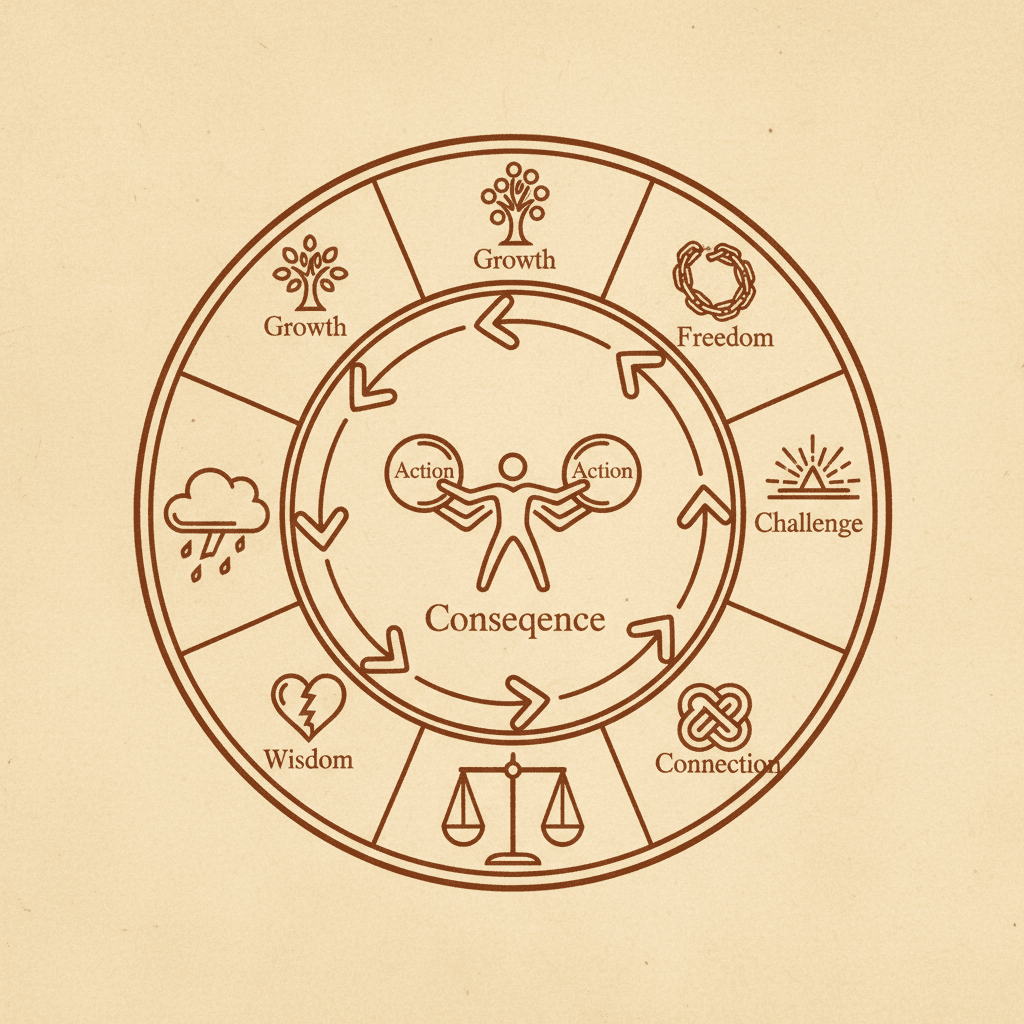
Understanding Karma in Yoga
In the modern world, the word "yoga" has become almost synonymous with physical exercise. But in the Vedic tradition, yoga encompasses a vast system of practices and philosophies aimed at one goal: the realization of one's true nature.
### The Original Meaning
The Sanskrit word "yoga" comes from the root "yuj" meaning "to join" or "to unite." But unite what with what? According to Vedanta, yoga is the recognition that the individual self (jivatma) was never separate from the universal reality (Brahman).
### The Traditional Framework
The Vedic tradition describes multiple paths of yoga, each suited to different temperaments:
- Karma Yoga — the path of selfless action
- Bhakti Yoga — the path of devotion
- Jnana Yoga — the path of knowledge
- Raja Yoga — the path of meditation and mental discipline
These paths are not competing alternatives but complementary approaches that often work together.
Key Principles
### 1. Preparation of the Mind

All yoga traditions agree that the mind must be prepared for higher understanding. An agitated, scattered mind cannot perceive subtle truths.
### 2. Ethical Foundation
The yamas (restraints) and niyamas (observances) provide the ethical foundation without which no genuine spiritual progress is possible:
Yamas: Non-violence, truthfulness, non-stealing, moderation, non-possessiveness
Niyamas: Cleanliness, contentment, discipline, self-study, devotion to the total
### 3. Regular Practice
Consistency matters more than intensity. A daily practice of even 20 minutes produces greater results than occasional marathon sessions.
### 4. Guidance from a Teacher
The subtleties of genuine yoga practice require guidance from someone who has walked the path. Books and videos can supplement but not replace a qualified teacher.
The Deeper Purpose
The ultimate purpose of all yoga is not physical health, stress reduction, or even peace of mind — though these may arise as side benefits. The real purpose is self-knowledge: recognizing your true nature as limitless, ever-present consciousness.
Physical practices, breathing techniques, and meditation are all means toward this end. When they become ends in themselves, the deeper purpose is lost.
Common Misconceptions
"Yoga is exercise" — Physical postures (asanas) are one small part of a vast tradition. The Yoga Sutras of Patanjali dedicate only 3 verses out of 196 to asana.
"Yoga is Hindu" — While yoga emerged from Vedic culture, its principles are universal. Self-knowledge belongs to no particular culture or religion.
"You need to be flexible" — Yoga is about mental flexibility, not physical. The body is a tool, not the target.
Practical Starting Points
- Establish a regular, modest practice rather than an ambitious, inconsistent one
- Study the philosophical foundations alongside any physical practice
- Seek a teacher who emphasizes understanding over technique
- Be patient with yourself — genuine growth takes time
- Integrate practice into daily life rather than keeping it separate
Conclusion
Yoga in its authentic sense is one of humanity's greatest contributions to self-understanding. By approaching it with respect, sincerity, and proper guidance, it can transform not just your body and mind, but your fundamental understanding of who you are.
*To explore yoga in its full traditional context, visit our [Vedanta courses](/) for systematic study with qualified guidance.*
Want to study Vedanta in depth?
Join a Study Group →