
In the Vedic tradition, a mantra is far more than a word or phrase. It is a precise sound structure with the power to transform the mind. The ṛṣis (sages) did not invent mantras -- they discovered them through deep states of contemplation.
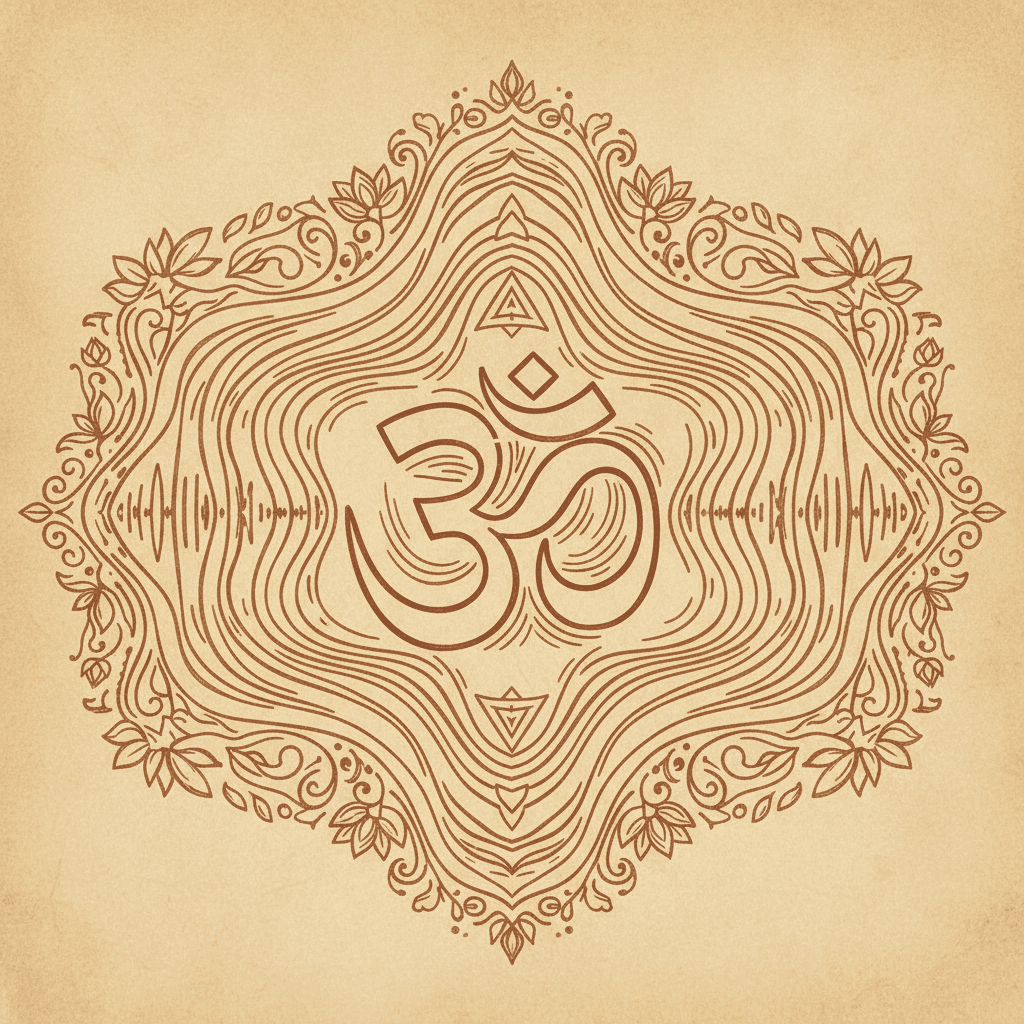
What Is a Mantra
The word comes from "man" (mind, to think) and "tra" (instrument, that which protects). A mantra is an instrument of the mind. It protects the mind from dispersion and directs it toward knowledge.
The Vedic View of Sound
Sound (śabda) in the Vedic tradition is not just air vibration. It is the creative principle of reality. The Vedas themselves are śruti -- "that which was heard." This means the relationship between word and meaning is not arbitrary convention. Certain sounds carry inherent power.

Categories of Mantras
Vedic mantras: Used in rituals (yajña) and meditation. They come from the four Vedas and have precise rules for recitation.
Bīja mantras: Seed syllables -- Om, Hrīṃ, Śrīṃ, Klīṃ. Each carries the concentrated energy of a particular devatā.
Mahāvākyas: The great sentences of the Upaniṣads -- "Tat tvam asi" (You are That), "Aham Brahmāsmi" (I am Brahman). These are not affirmations but revelations of identity.
How to Practice
- Choose a mantra -- Om is universally appropriate
- Sit in a quiet place -- spine erect, body relaxed
- Begin with vocal repetition -- let the sound fill your awareness
- Move to whispered, then mental -- the subtler the repetition, the deeper the effect
- Maintain regularity -- daily practice produces results
What Mantras Are Not
They are not magic spells. Not positive affirmations. Not tools for manifesting material desires. Using mantras for worldly gains misses the point entirely. The purpose is mind purification and, ultimately, self-knowledge.
The Role of the Teacher
The tradition of receiving a mantra from a qualified teacher (mantra-dīkṣā) exists because context, pronunciation, and attitude matter. A mantra given by a guru carries the weight of the entire lineage.
Want to study Vedanta in depth?
Join a Study Group →