
A mantra is not a motivational phrase you repeat until you believe it. It is a sophisticated tool, developed over millennia of tradition, for directing and quieting the mind.
What Is a Mantra
Mantra comes from "man" (mind) + "tra" (instrument/protection). Literally: instrument of the mind, or that which protects the mind.
In practice, it is a sound or phrase you repeat mentally or verbally during meditation. The sound occupies the mind, preventing it from scattering into random thoughts.
Om -- The Fundamental Mantra
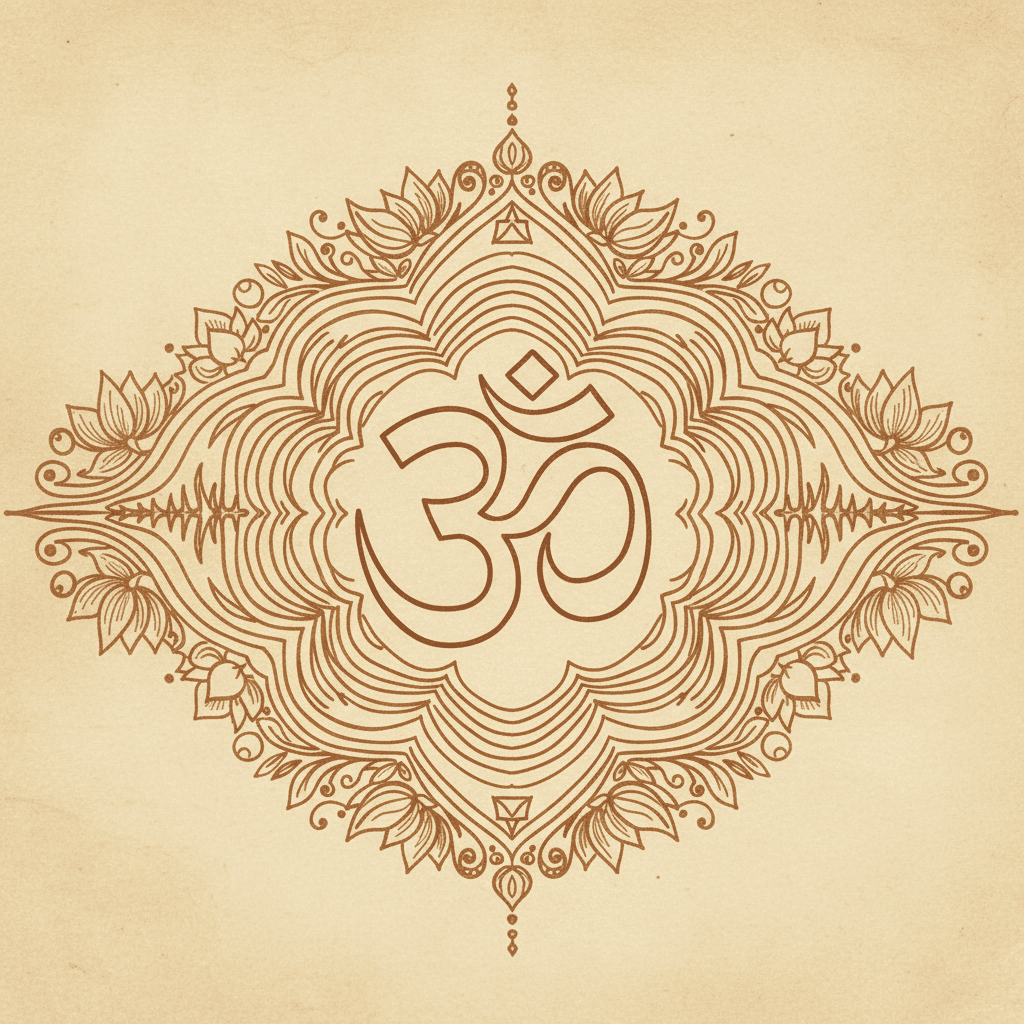
Om (or Auṃ) is not a random sound. It is considered the primordial sound -- the fundamental vibration from which all manifestation arises.

Meditation with Om: 1. Sit comfortably -- spine upright 2. Inhale deeply 3. While exhaling, chant "Ommm" -- prolonging the sound 4. Feel the vibration -- in the chest, throat, head 5. Repeat -- for 10-15 minutes
Silent vs. Vocal Mantra
- Vocal (japa): for beginners. The physical sound anchors attention
- Whispered (upāṃśu): intermediate. Less external, more subtle
- Mental (mānasa): advanced. Purely mental repetition. Most powerful
In the Vedānta Tradition
In Vedānta, mantras are not just sounds -- many carry meaning. "Aham Brahmāsmi" (I am Brahman) is not a positive affirmation. It is a declaration of truth that, when understood, liberates.
The most effective mantra is the one received from a qualified teacher, suited to your nature and moment. But starting with Om is always appropriate.
Want to study Vedanta in depth?
Join a Study Group →