
Dharma sustains everything. It is cosmic order and your personal duty. In Vedanta, it guides you toward harmony with yourself, society, and the universe.
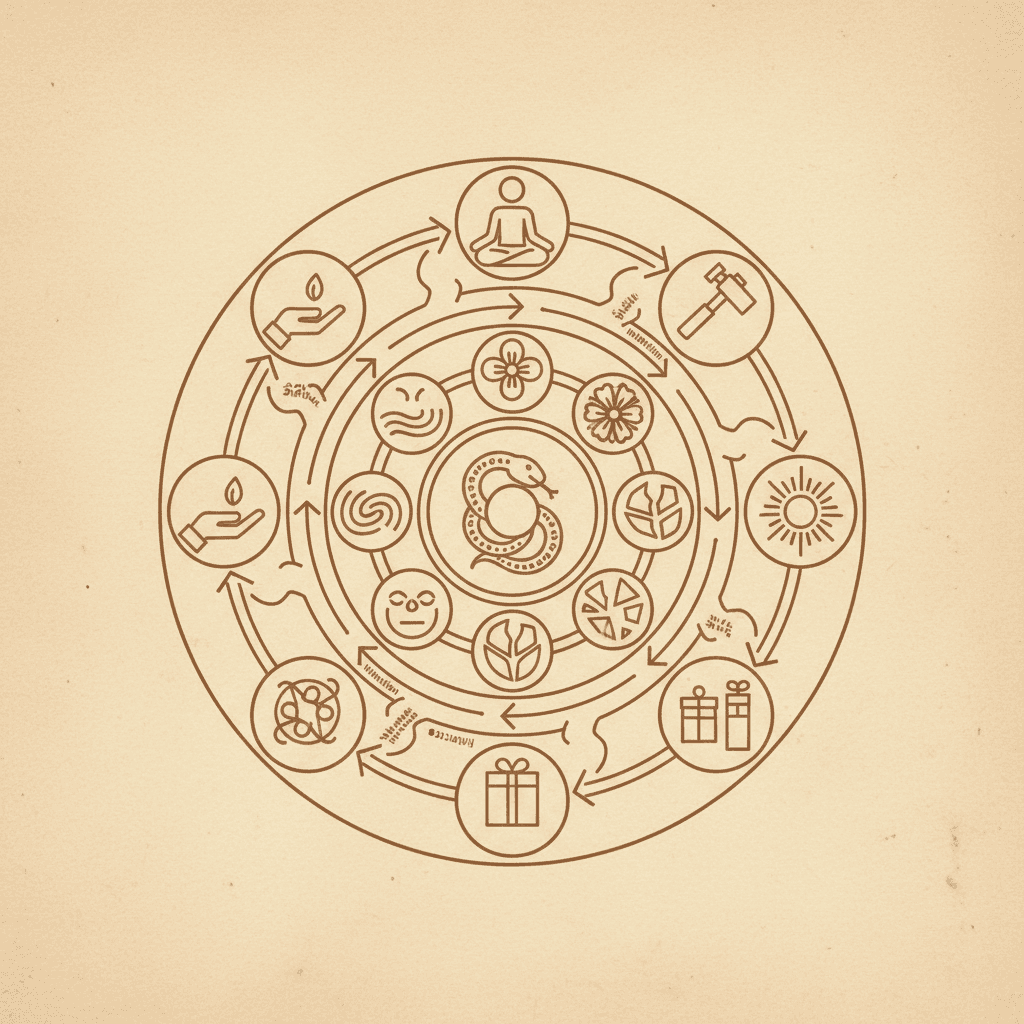
The Origin and Evolution of the Concept
### From Rta to Dharma
Rta is the primordial order. Sun, moon, seasons follow it. Prior to the gods. Dharma applies rta to human life.
### Dharma in Sacred Texts
In the Rgveda, dharma sustains the world. In the Upanisads, moral and spiritual. Bhagavad Gita 4.7: Krsna protects dharma.
Classifications: Samanya and Visesa
### Samanya Dharma: Universal Values

For everyone: satya (truth), ahimsa (non-violence), daya (compassion), sama (mental calm), dama (sense control), tyaga (renunciation), tapas (austerity), sauca (purity). The ethical foundation.
### Visesa Dharma: Specific Duty
1. Svadharma: your unique duty. 2. Asrama Dharma: brahmacarya (study), grhastha (family), vanaprastha (detachment), sannyasa (total spiritual dedication). 3. Varna Dharma: social function. 4. Apaddharma: duties in crisis.
Dharma and Karma
Dharma generates punya. Adharma generates papa. Niskama karma: act without attachment to results.
Practical Application
### Making Dharmic Decisions
- Does it align with values?
- Is it your svadharma?
- What are the consequences?
- Does it serve a greater purpose?
### Resolving Dharmic Conflicts
Hierarchy: life first. Pure intention. A guru helps.
Dharma as Spiritual Path
### Dharma and Moksa
Dharma purifies the mind for moksa.
### Dharma and Self-Knowledge
Living dharma reveals ego vs. atman. Develops saksitva (witness-ship).
Cultivating a Dharmic Life
### Fundamental Practices
Svadhyaya, satsanga, acara, dhyana, seva.
### Signs of Progress
Santi, karuna, viveka, santosa, dhrti.
### Obstacles and Their Overcoming
Kama: vairagya. Krodha: ksama. Lobha: santustti. Moha: jnana.
Want to study Vedanta in depth?
Join a Study Group →