
"I am not the body nor the mind." You've heard this in some spiritual context. Perhaps in a video, a book, a lecture. And you probably thought one of two things: "how beautiful" or "how absurd."
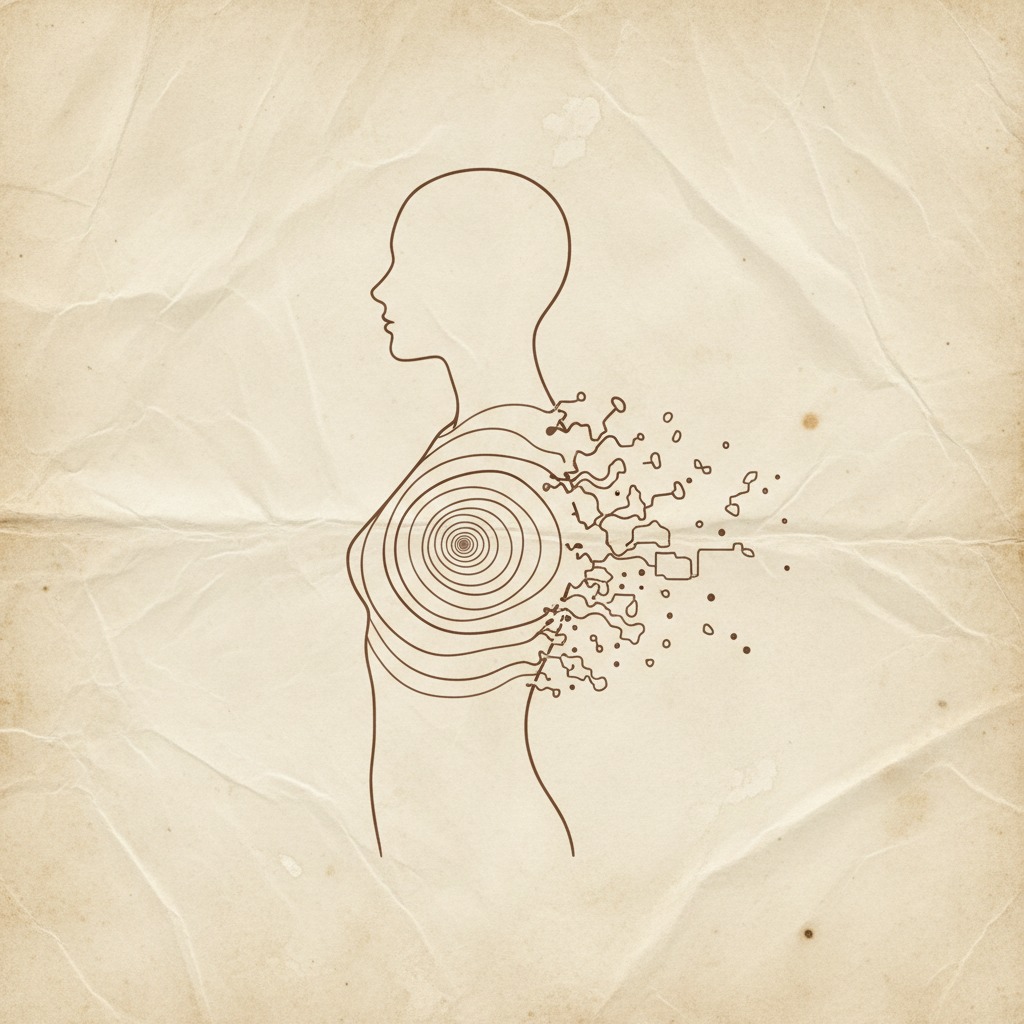
Both reactions miss the point. Because this phrase, when understood correctly, is the most important discovery a human being can make.
What This Phrase Does NOT Mean
First, what it doesn't mean:
- It doesn't mean denying the body. You have a body. It functions, feels pain, needs food. No one is telling you to ignore it.
- It doesn't mean the mind doesn't exist. Thoughts, emotions, memories — all of these exist and are part of the experience.
- It's not a mystical affirmation. It's not something you "feel" in a deep meditation and then lose.
What It Really Means
The phrase points to an investigation: who is the "I" that observes the body and the mind?
You say "my body." You say "my mind." You say "my thoughts." Who is the owner?
If the body were you, when the body changes — ages, gets sick, gains weight — you would fundamentally change. But something remains. You at 5 years old and you at 50 — the body is radically different, but the sense of "I" is the same.
If the mind were you, when the mind changes — from sad to happy, from confused to clear — you would fundamentally change. But you observe these changes. The observer is not the observed.

The Discovery of Vedanta
Vedanta calls this unchanging "I" ātman. And describes it as:
- Sat — pure existence. You exist. This is undeniable.
- Cit — consciousness. You are conscious. Everything you experience only exists because there is consciousness to illuminate it.
- Ānanda — fullness. In the absence of mental disturbance, what remains is peace. Not a "conquered" peace — the peace that is your nature.
Ātman is not "something beyond" the body and mind. It is that which allows the body and mind to exist in your experience. Without consciousness, there is no experience. And this consciousness is you.
Why Does This Matter?
Because the cause of all psychological suffering is the confusion of identity.
When you identify with the body: - Illness becomes an existential threat - Aging becomes a tragedy - Death becomes the absolute end
When you identify with the mind: - Negative thought becomes "I am negative" - Difficult emotion becomes "I am broken" - Failure becomes "I am a failure"
When you understand that you are ātman — the consciousness that illuminates the body and mind — these things don't disappear. But they lose the power to define you.
Does the body get sick? Yes. Take care of it. But you are not the illness. Does the mind become anxious? Yes. Work with it. But you are not the anxiety.
The Practical Investigation
You don't need to believe anything. Do the experiment now:
- Close your eyes.
- Observe a thought arise.
- Notice: you are not the thought. You are the one who perceives the thought.
- Observe a sensation in the body.
- Notice: you are not the sensation. You are the one who perceives the sensation.
Who is this perceiver? Does it have a form? A limit? A location?
This investigation is the beginning of Vedanta. Not as belief — as verifiable experience.
The Error of Spiritual Bypass
Beware of the distorted version of this phrase. Some use "I am not the body nor the mind" to: - Ignore emotional problems ("I don't need therapy, I am ātman") - Deny physical needs ("the body doesn't matter") - Avoid responsibilities ("none of this is real")
This is not Vedanta. It is escapism. Vedanta includes caring for the body and mind — karma-yoga is exactly about acting in the world with responsibility.
The Invitation
"I am not the body nor the mind" is not a conclusion. It is an invitation to investigate. And when the investigation matures — with study, reflection, and a competent teacher — what remains is a freedom that no circumstance can take away.
Because you discover that you were never trapped.
Want to study Vedanta in depth?
Join a Study Group →