
Kundalini on the internet: energy serpent, spontaneous awakening, cosmic experiences. Kundalini in tradition: a serious practice that requires preparation, a teacher, and years of dedication.
What Is Kundalini
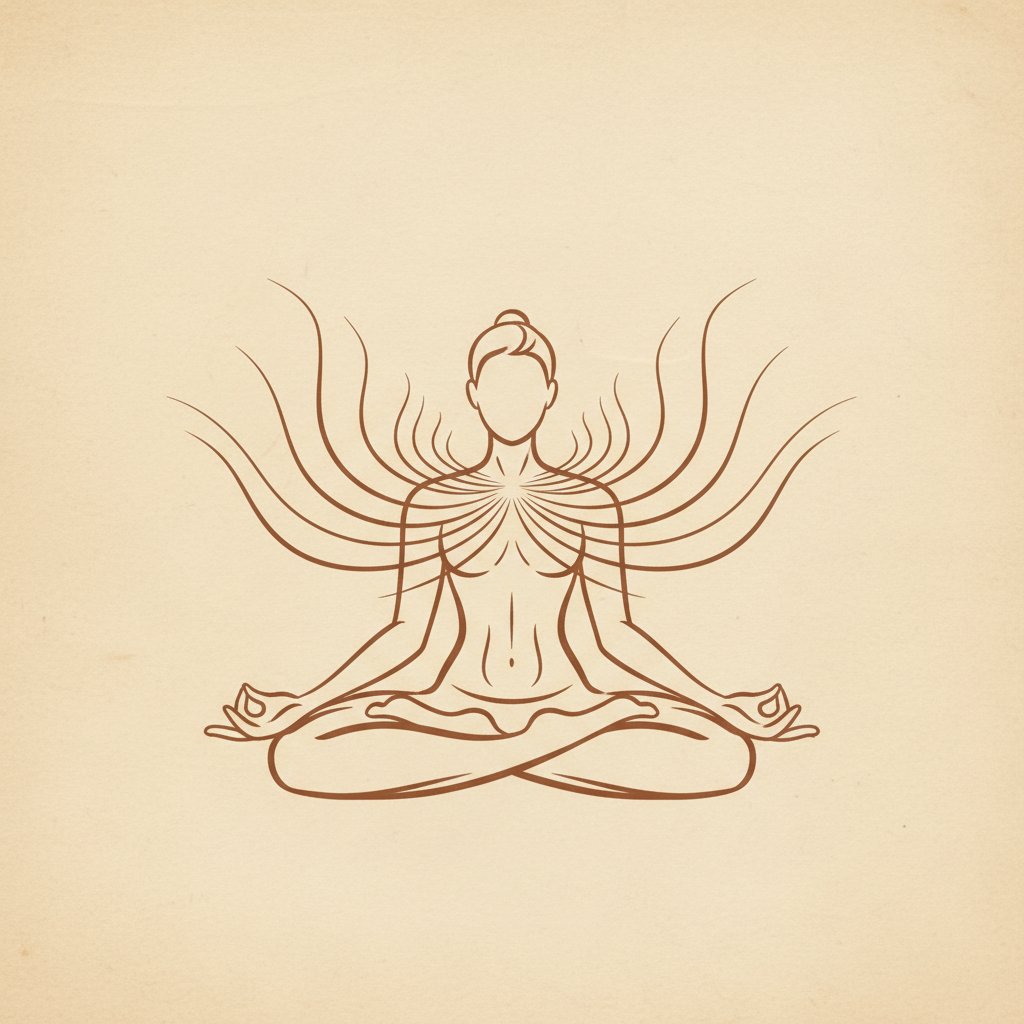
In the yogic tradition, kundalini is the latent energy at the base of the spine (mūlādhāra chakra). Through specific practices of breathing, meditation, and purification, this energy is directed upwards, passing through the chakras.
What It Is Not
- It's not something that "awakens" spontaneously by watching YouTube
- It's not an intense emotional experience (that could be many other things)
- It's not dangerous when practiced correctly with guidance
- It's not necessary for spiritual growth

The Real Practice
Traditional Kundalini yoga includes: - Āsanas specific — postures that prepare the body - Prāṇāyāma intense — advanced breathing techniques - Bandhas — energetic locks in the body - Mantras and visualizations — directing the energy - Guru's guidance — essential, not optional
The Vedānta View
Vedānta respects kundalini practices, but does not posit them as necessary for liberation. Self-knowledge (ātma-jñānam) is what liberates — not energetic experiences.
Experiences come and go. Knowledge, once assimilated, remains.
If kundalini interests you, seek a qualified teacher. And understand: regular basic meditation already produces profound transformation. Start there.
Want to study Vedanta in depth?
Join a Study Group →