
Om is, without a doubt, the most recognized syllable in the world. It appears on t-shirts, tattoos, yoga studios, and meditation apps. But what does Om really mean? And why does the Vedic tradition consider it so important?
Let me tell you: Om is not a mystical sound you chant to "raise vibrations." It's something much deeper — and much more real.
What is Om?
Om (or more precisely, Oṁkāra) is the pratīka — the symbol — of Brahman, the totality of reality. This is in the Upaniṣads, it's not a modern invention.
The Māṇḍūkya Upaniṣad, one of the most important texts of Vedānta, begins like this:
"Oṁ ity etad akṣaram idaṁ sarvam" — Om, this syllable, is all of this.
In other words: Om represents the totality of existence. It's not a piece of reality — it's the entire reality, expressed as sound.
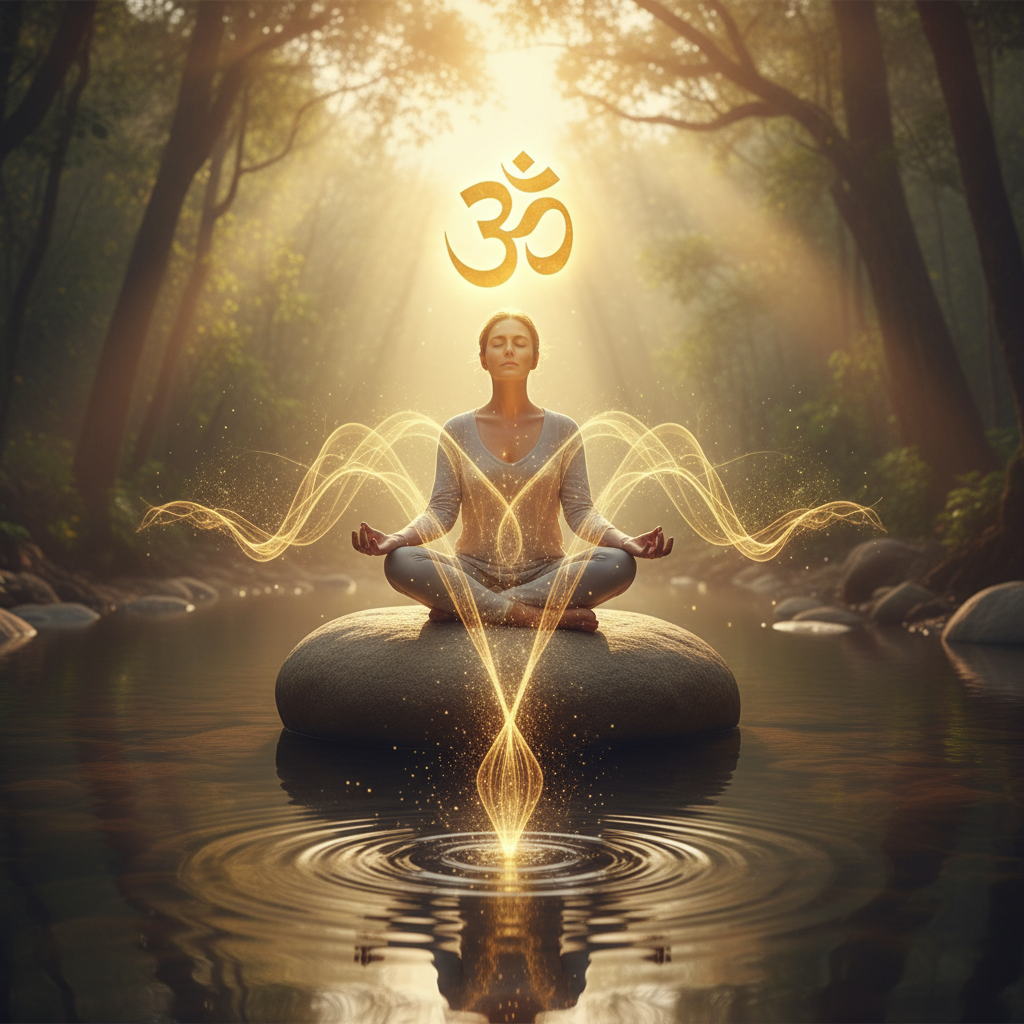
The Three Letters of Om: A-U-M
Om is composed of three fundamental sounds: A, U, and M. Each represents an aspect of human experience:
- A (akāra) — the waking state (jāgrat). It's the experience of the external world, of objects, of the senses.
- U (ukāra) — the dream state (svapna). It's the experience of the internal world, of the mind, of emotions.
- M (makāra) — the deep sleep state (suṣupti). It's the experience of total stillness, without objects.
And beyond the three? The silence that follows the M — called turīya — represents the pure consciousness that permeates all three states. That silence is you.
Why is Om So Important in Vedānta?
Because Om functions as a bridge between sound and meaning. When you chant Om with understanding, you're doing something that goes beyond meditation — you're pointing the mind towards the nature of reality.
The Kaṭha Upaniṣad says:
"Sarve vedā yat padam āmananti" — all the scriptures point to that which Om reveals.
Om is not just another mantra. It is the mantra from which all others derive.
Om in Practice: How to Use It
There are several ways to practice with Om:
- Japa (repetition) — Chanting Om repeatedly, aloud or mentally, as a way to quiet the mind.
- Upāsana (meditation) — Meditating on Om and its meanings (the three states + turīya).
- Beginning and end of study — Traditionally, every Vedānta class begins and ends with Om.
The most common way is to sit comfortably, close your eyes, and chant Om slowly, feeling each part: A... U... M... and the silence.
Om and Meditation: What's the Connection?
Meditation in Vedānta is not "emptying the mind." It's directing the mind towards an object of contemplation. Om is the most recommended object by tradition because:
- It summarizes all reality in one sound.
- It naturally leads to silence.
- It connects the practitioner with the deepest meaning of the Vedas.
If you practice meditation and have never included Om, give it a try. The difference is noticeable.
Recognized Benefits
Beyond its spiritual meaning, the practice of Om brings practical benefits:
- Breath regulation — the elongation of the sound naturally slows down the breath.
- Mental focus — repetition concentrates attention.
- Stress reduction — the vibration of the M resonates in the skull and has a calming effect.
- Preparation for study — the tradition uses Om to create a receptive mental disposition.
The Common Mistake
The biggest mistake about Om is treating it as "sound decoration." Om is not background noise for a yoga class. It is the sonic expression of the truth about who you are.
When you chant Om knowing what it represents, the practice gains another dimension. It's not faith — it's knowledge.
How to Start
If you've never practiced, start simple:
- Sit comfortably, spine erect.
- Close your eyes.
- Breathe in deeply.
- Chant Om slowly: AAAA... UUUU... MMMM... (silence).
- Repeat 3 to 11 times.
- Remain in silence for a few minutes.
Over time, the meaning of Om deepens. And that's when the practice truly begins.
Want to study Vedanta in depth?
Join a Study Group →