
Breath is the only bodily function that is both automatic and voluntary. You breathe without thinking — but you can consciously control it. That's why it's the perfect bridge between body and mind.
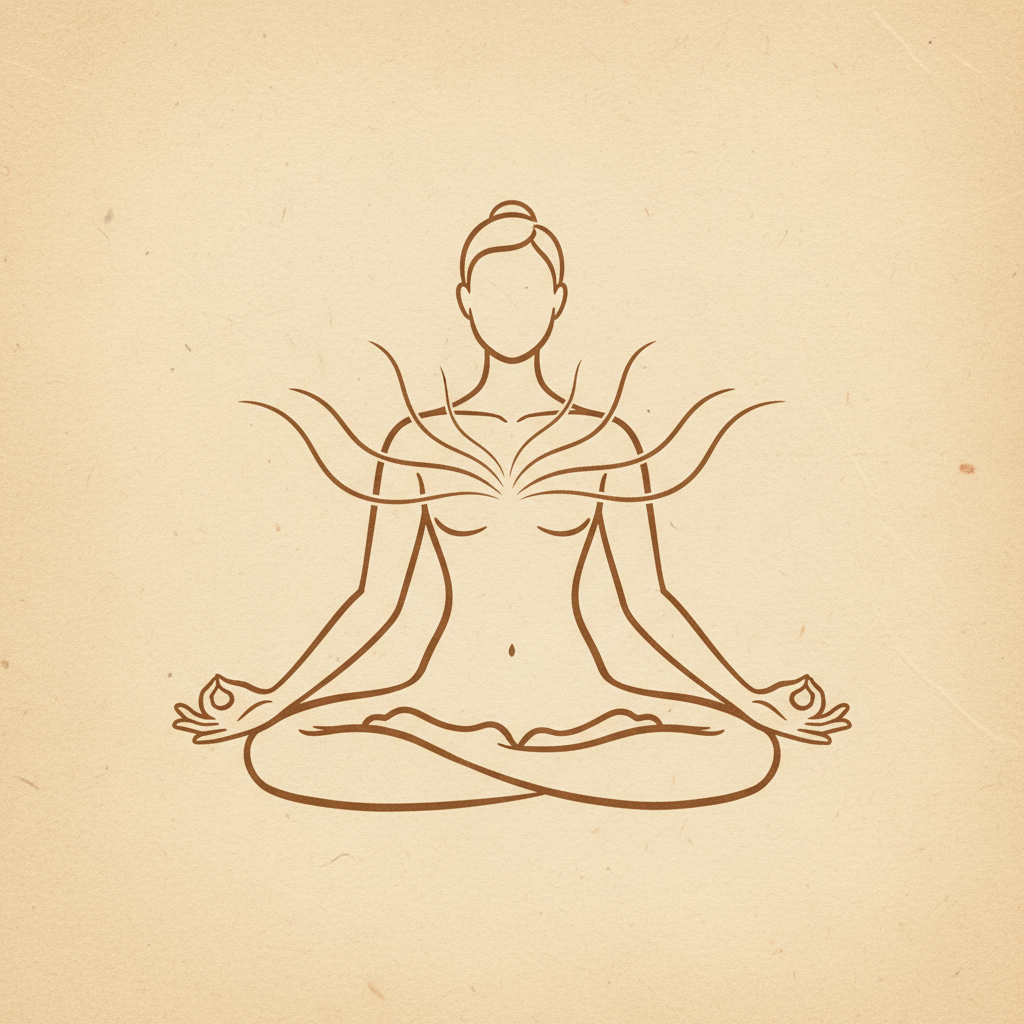
Why Breath Is Central to Meditation
Always available — no equipment, app, or special place needed Natural anchor — gives the mind something concrete to focus on Immediate feedback — breath reflects the mental state (anxious = fast, calm = slow) Bidirectional — changing the breath changes the mental state and vice versa
Practical Techniques
Simple observation (for meditation): - Just observe the natural breath, without changing anything - Notice: air entering, pause, air leaving, pause - When the mind wanders, return

Diaphragmatic breathing (for relaxation): - Inhale by expanding your belly (not your chest) - Exhale by gently contracting your belly - 4 counts inhale, 6 counts exhale
Nāḍī śodhana (alternate nostril breathing): - Close the right nostril, inhale through the left - Close the left, exhale through the right - Inhale through the right, exhale through the left - 5 cycles
In the Vedic Tradition
Prāṇāyāma (control of prāṇa through breath) is a complete science. It precedes meditation in Patañjali's system and prepares the mind for introspection.
Practical Tip
Before meditating, do 3-5 minutes of conscious breathing. This acts as a "gateway" — it takes you out of automatic mode and puts you into present mode.
Want to study Vedanta in depth?
Join a Study Group →