
Anxiety is not an enemy. It is a messenger. And meditation is not a weapon against it — it is a way to listen to what it has to say.
Why Meditation Helps
Anxiety is the mind projecting negative future scenarios and reacting as if they were real. Meditation trains the mind to perceive: "this is a thought, not reality."
This simple distinction — between thought and fact — is transformative.
Practical Technique
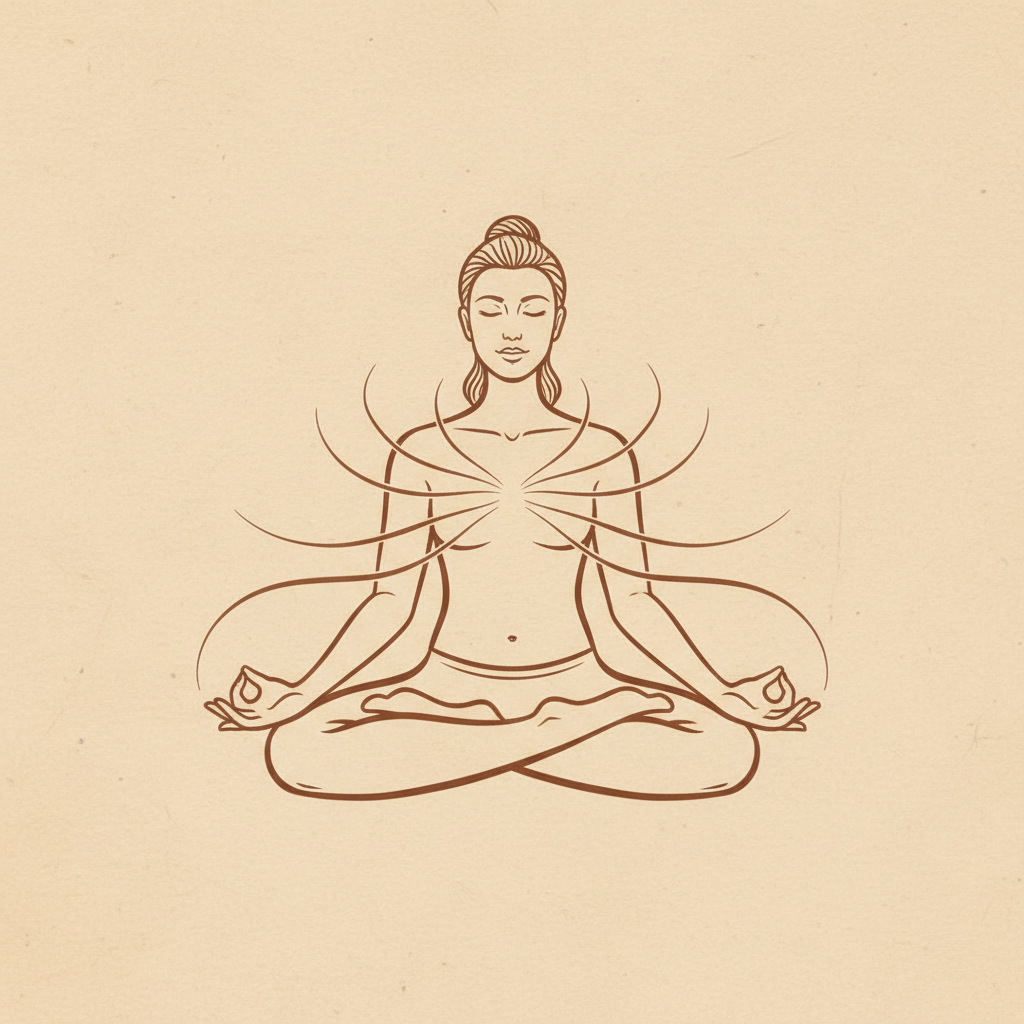
Sit — spine erect, hands on knees Name the state — say mentally: "anxiety is present" Locate it in the body — where do you feel it? Chest? Stomach? Throat? Breathe into that place — imagine the breath reaching where the tension is Observe — don't try to change anything. Just observe the sensation Repeat — when the mind starts creating scenarios again, return to the body


The Mistake of Meditating "Against" Anxiety
If you sit down to meditate thinking "I need to eliminate this anxiety," you are already tense. You are adding resistance upon resistance.
The correct approach is paradoxical: accept the anxiety. Give it space. When you stop fighting it, it naturally loses its power.
When Meditation Isn't Enough
Meditation is a powerful tool, but it has limits. If your anxiety is debilitating, seek professional help. Meditation complements treatment — it does not replace it.
Vedānta's Perspective
Vedānta asks: who is anxious? Is the consciousness observing the anxiety anxious? Or just the mind? This investigation goes beyond symptom management — it questions the very identity of the one who suffers. And that changes everything.
Start with the basic meditation practice and progress with consistency.
Want to study Vedanta in depth?
Join a Study Group →