
"Aligning the chakras" has become the promise of every spiritual retreat. But what are chakras? Do they exist? And can meditation really "align them"?
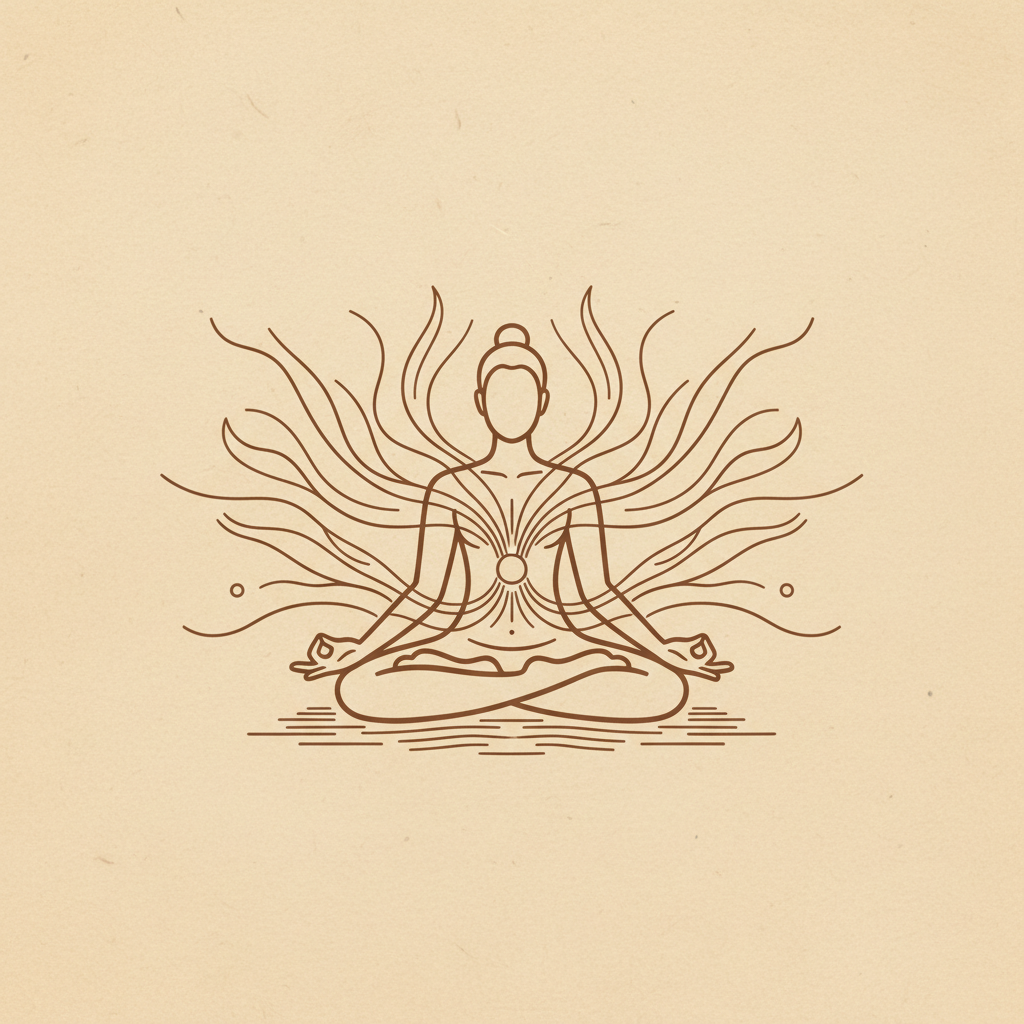
What Are Chakras
In the tradition of Tantra and Haṭha Yoga, chakras are centers of energy (prāṇa) in the subtle body. They are not physical organs — they are points where energy channels (nāḍīs) intersect.
The seven main chakras: 1. Mūlādhāra — base of the spine (security) 2. Svādhiṣṭhāna — below the navel (creativity) 3. Maṇipūra — solar plexus (power) 4. Anāhata — heart (love) 5. Viśuddha — throat (expression) 6. Ājñā — between the eyebrows (intuition) 7. Sahasrāra — top of the head (consciousness)
Chakra Meditation: How It Works
Meditation focusing on chakras uses visualization and breath to "activate" each center: - Focus on the chakra's point - Visualize the associated color/light - Breathe, directing prāṇa there - Repeat for each chakra, from bottom to top

What Vedānta Says
Vedānta recognizes the subtle body (sūkṣma-śarīra) but does not give central importance to chakras. Vedānta's focus is self-knowledge — knowing that you are ātman, pure consciousness.
Working with chakras can be useful as preparation. But if you stop at the chakras and never ask "who am I?", you've stayed with the tool without reaching the destination.
Balanced Approach
Use chakra meditation if it helps you calm your mind and connect with your body. But don't turn it into an obsession. The self-knowledge that Vedānta offers goes beyond any energetic map.
Want to study Vedanta in depth?
Join a Study Group →