
Zazen is the central practice of Zen Buddhism — "just sitting" (shikantaza). No mantra, no visualization, no goal. Just total presence in the act of sitting.
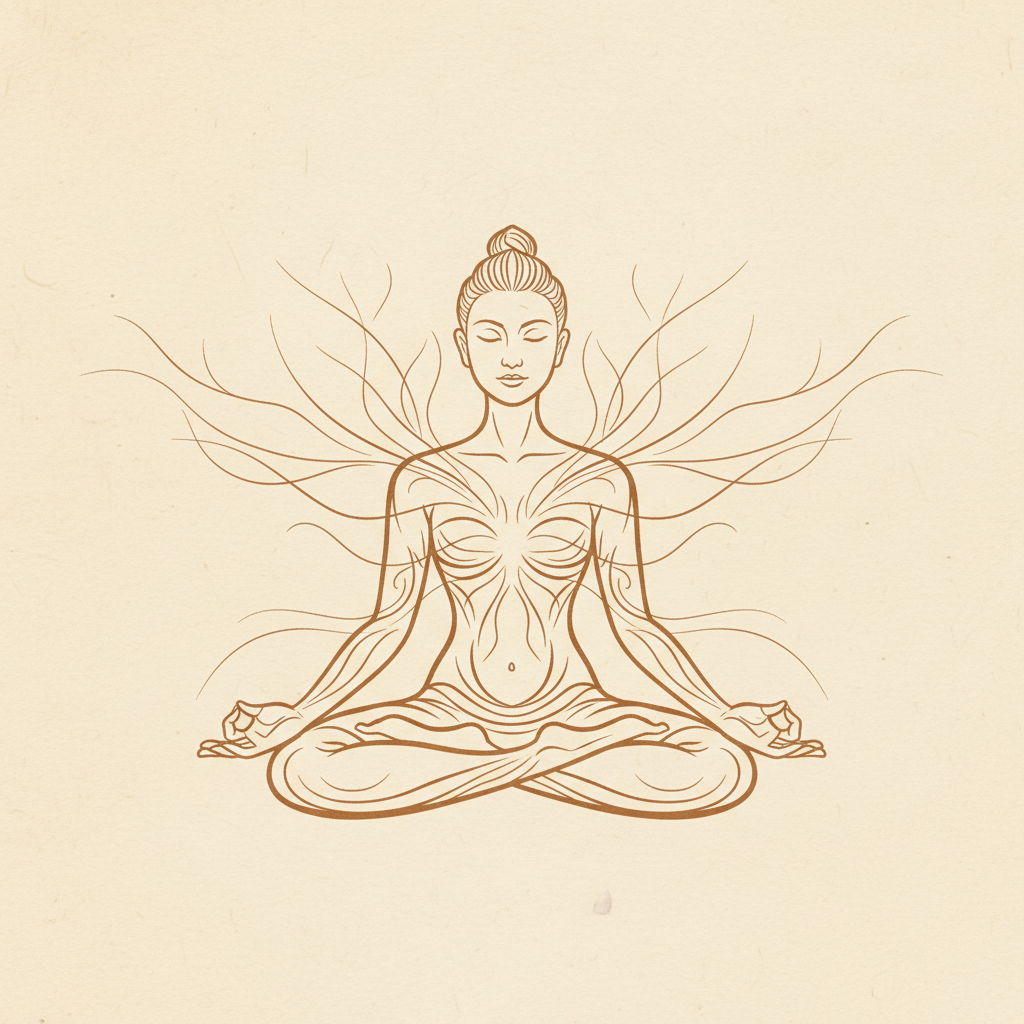
What is Zen
Zen is the Buddhist school that emphasizes direct experience over intellectual study. Originating in China as Ch'an (derived from the Sanskrit dhyāna), it flourished in Japan as Zen.
The essence of Zen can be summarized as follows: - Does not depend on scriptures - Points directly to the mind - See one's own nature and awaken
How to practice Zazen
- Posture: Sit in a firm position (zafu or chair), spine erect
- Hands: Cosmic mudrā — left hand over right, thumbs touching
- Eyes: Semi-open, gaze 45 degrees downwards
- Breathing: Natural, attention on the hara (below the navel)
- Mind: Thoughts come and go — do not follow, do not reject
- Duration: 25-40 minutes per session

Zazen and Vedic meditation
| Aspect | Zazen | Vedic Meditation | |--------|-------|------------------| | Posture | Rigid, formal | Comfortable, firm | | Eyes | Semi-open | Closed | | Goal | None (shikantaza) | Self-knowledge | | Tradition | Japanese Buddhism | Vedānta (Upaniṣads) |
What we can learn from Zen
The greatest lesson of Zen is radical simplicity. Do not complicate what is simple. Do not seek special experiences. Just be present. This attitude is compatible with any tradition — including Vedānta.
Want to study Vedanta in depth?
Join a Study Group →