
Spiritual retreats are becoming increasingly popular – and for good reason. In a world of constant stimulation, the possibility of stopping, quieting down, and looking inward has become almost a necessity.
But many people arrive at a retreat without knowing what to expect. And this can lead to unnecessary anxiety or unrealistic expectations. I'm going to tell you what really happens.
What is a Spiritual Retreat?
A spiritual retreat is a period dedicated to inner practice – meditation, study, contemplation – in an environment removed from routine. It can last from a weekend to several months.
The principle is simple: by removing external distractions, you create space to look inward.
There are retreats from various traditions: Buddhist (vipassana), Hindu (Vedānta, yoga), Christian, Sufi, and non-denominational. The format varies, but the purpose is common.
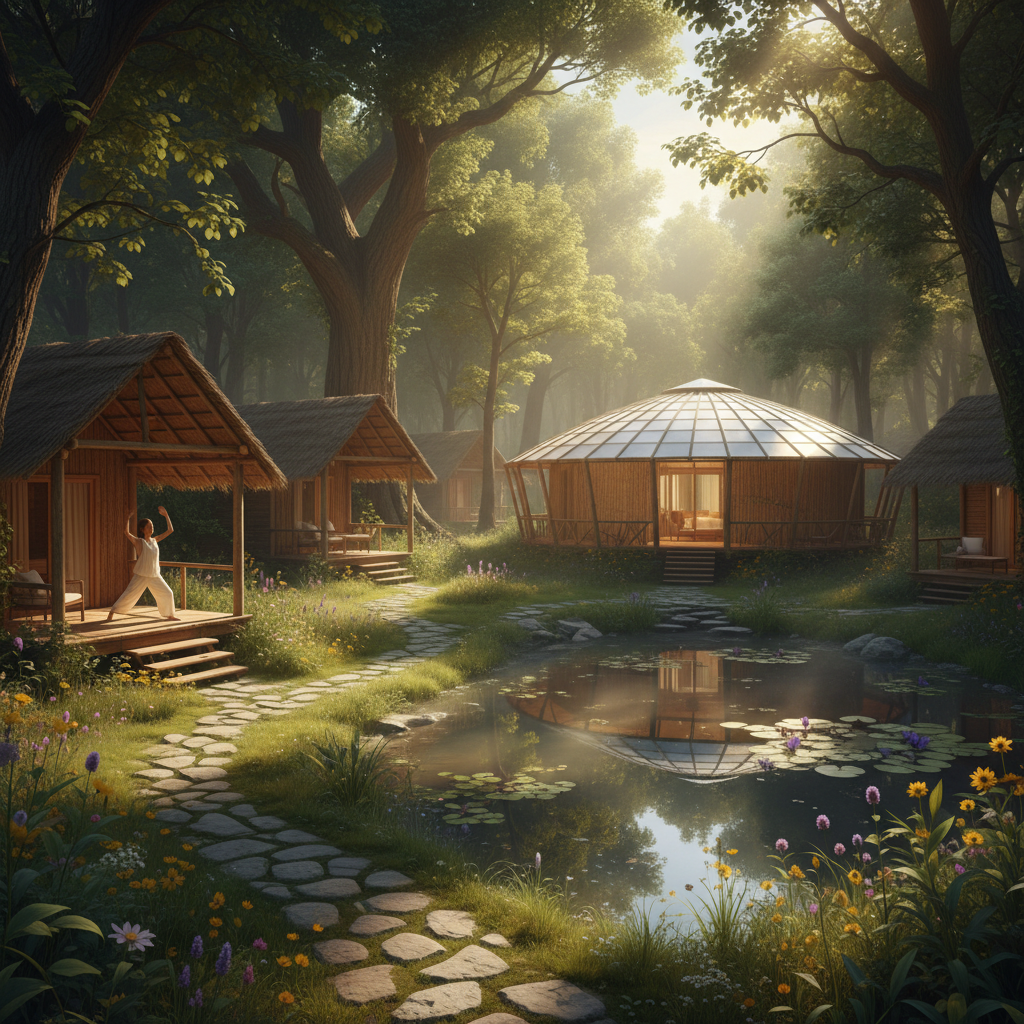
What Happens on a Retreat?
The typical routine of a retreat includes:
Waking Up Early Most retreats start between 5 am and 6 am. The morning period is considered the most favorable for contemplative practices (brāhma-muhūrta in the Vedic tradition).
Group Practices Guided meditation, chanting, prayers, or pranayama. Group practice creates an environment of mutual support.
Study or Talks In Vedānta retreats, there are daily classes on texts like the Bhagavad Gita or Upaniṣads. In meditation retreats, there are instructions on technique.
Silence Many retreats include periods of silence (mauna). Some are entirely in silence. This is not a punishment – it's a powerful tool for quieting the mind.
Simple Meals Food at retreats is usually vegetarian and simple. Mindful eating is part of the practice.
Free Time There are periods for rest, nature walks, or personal reflection. This time is as important as the formal practices.
How to Prepare
Mentally
* Don't go with expectations of a "mystical experience." Retreats are not about extraordinary experiences. They are about clarity. * Accept that it might be uncomfortable. No phone, no Netflix, no distractions – you'll be with yourself. This can be intense in the first few days. * Go with a willingness to learn, not to judge. Even if something seems strange, give it a chance.
Practically
What to bring to a retreat: * Comfortable and modest clothing (avoid flashy prints) * Meditation cushion (if you have one; many centers provide them) * Notebook and pen (for personal notes) * Personal hygiene items * Any necessary medication * An open mind
What NOT to bring: * Rigid expectations * Haste * The need to be "connected"

The First Few Days: What Really Happens
I'll be honest: the first few days of a retreat can be difficult.
Day 1: Excitement mixed with anxiety. You're adjusting to the space, the people, the routine. The mind is still in "external world" mode.
Day 2-3: Restlessness appears. Without distractions, suppressed thoughts and emotions come to the surface. This is normal – and it's part of the process.
Day 4+: The mind begins to quiet down. You realize you don't need so much stimulation. The practice deepens naturally.
Last Day: A clarity that's hard to describe. Not necessarily "enlightenment" – but a sense of inner space that wasn't accessible before.
What Kind of Retreat to Choose?
It depends on what you're looking for:
* Silence Retreat (Vipassana, for example): For those who want a deep dive into meditation. Intense. Recommended if you already have some practice. * Vedānta Retreat: For those who seek understanding – not just experience. Includes systematic study with a teacher. Ideal for those seeking intellectual clarity beyond practice. * Yoga Retreat: Combines asanas, pranayama, and meditation. More accessible for beginners. * Non-Denominational Retreat: For those who want silence and nature without being tied to a specific tradition.
How Long to Stay?
* Weekend (2-3 days): Introductory. Good for trying it out. * One Week: The minimum to feel a real change. The first 2-3 days are for adjustment. * Two Weeks or More: For in-depth study. Traditional Vedānta retreats last 2-4 weeks.
After the Retreat
The real challenge isn't the retreat – it's the return. How to maintain clarity amidst the routine?
Some tips: 1. Maintain a daily practice, even if short (15-20 min of meditation) 2. Don't try to "convert" anyone – live what you learned in silence 3. Reintroduce stimuli gradually – don't open 50 notifications in the first minute 4. Plan your next retreat – regularity is more important than intensity
Is It Worth It?
Yes. A well-chosen retreat can be one of the most transformative experiences of your life. Not because something magical happens – but because you finally stop and look at what has always been here.
Want to study Vedanta in depth?
Join a Study Group →