
Vedanta Camp and the complete spiritual experience — and that means something very specific.
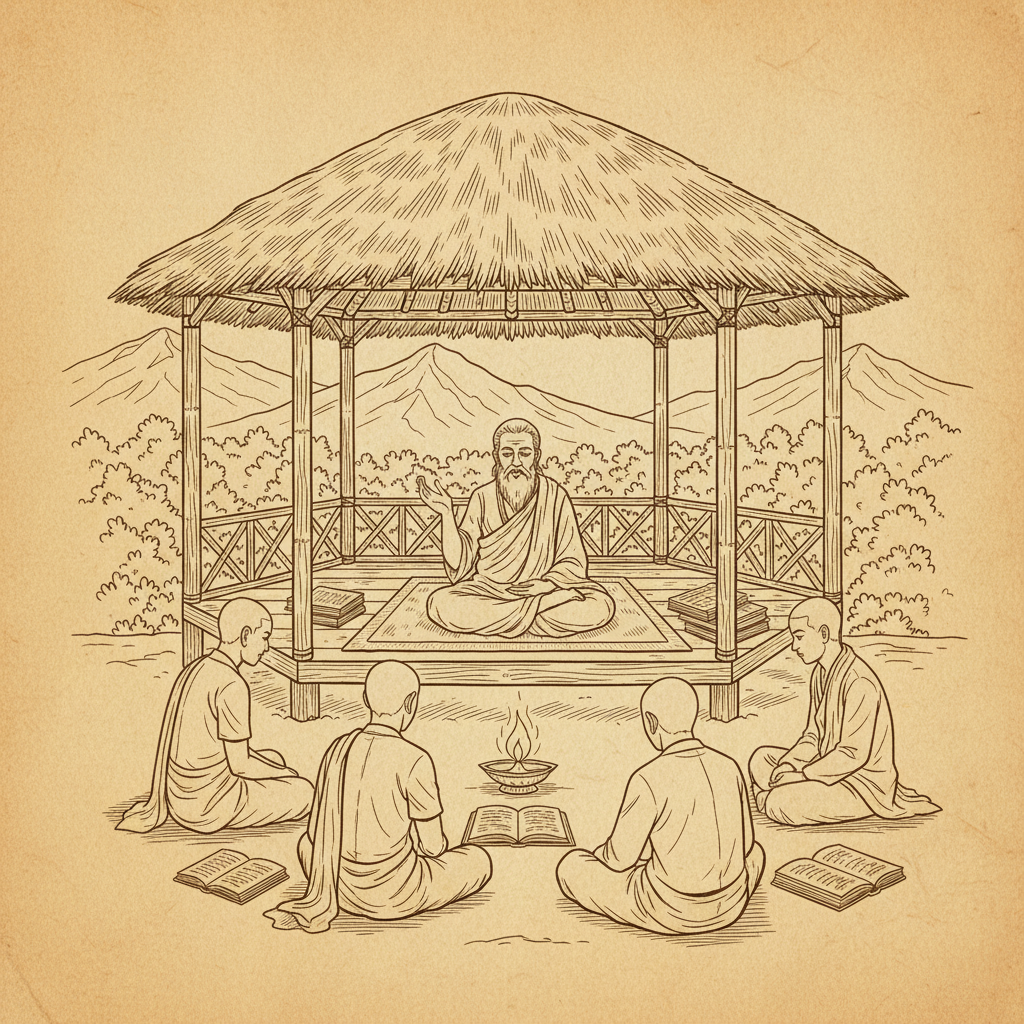
It's not just meditation. It's not just study. It's not just practice. It's all of it together, lived in community, with guidance from a qualified teacher, in a state of temporary seclusion. It's the format the Vedic tradition has used for millennia to transmit knowledge — updated for the 21st century, but without losing its essence.
What Differentiates Vedanta Camp
If you've ever done a meditation retreat, you know how it works: you arrive, meditate for many hours a day, eat in silence, and leave. It has value. But something is missing.
If you've ever done an intensive Vedānta course, you know how it works: dense classes, a lot of content, little time to assimilate. It has value. But something is also missing.
Vedanta Camp combines what's missing in both:
- Study of Vedānta — classes with a qualified teacher, study of traditional texts, discussion, manana (reflection)
- Sādhana — spiritual practices (meditation, chanting, rituals, prayers)
- Ancestral practices — elements of Vedic culture that support study
- Āśrama life — community routine, karma-yoga (service), living together
- Seclusion — temporary withdrawal from the everyday world for deep immersion
None of these elements work as well alone as they do all together. This is what the tradition has always known.
The Routine of a Typical Day
A day at Vedanta Camp follows a rhythm that seems simple, but is profoundly transformative:
Early morning — Waking before the sun. Personal practices: bathing, sandhyā vandana (dawn prayer), silent meditation.
Morning study session — Formal Vedānta class. A classical text being studied verse by verse. Questions, discussion, clarification. This is śravaṇa — the listening to the teaching.
Chanting — Recitation of Sanskrit texts. Not as an empty ritual, but as a practice that calms the mind and connects with the lineage.
Karma-yoga — Community service. Cooking, cleaning, organizing. Not as an obligation, but as a practice of attitude. This is where theory becomes life.
Afternoon session — More study, or satsanga (conversation with the teacher), or guided manana. Space for deep questions.
Late afternoon — Free time. Walk in nature, reading, rest. The mind needs space to digest what it has heard.
Evening — Ārati (lamp ceremony), final meditation, silence.
This rhythm is not accidental. Each element prepares the next. Karma-yoga cultivates the necessary attitude for study. Study gives direction to meditation. Meditation assimilates what has been studied. Seclusion allows all of this to happen without the distractions of everyday life.
The Value of Seclusion
One point that deserves emphasis: seclusion is not escape.
Many people confuse withdrawing from the world with escaping the world. They are opposite things. The seclusion at Vedanta Camp is strategic — you withdraw temporarily to find yourself. No ringing cell phones, no work demands, no automatic routine that swallows your days.
In this space of silence and simplicity, things happen: - Mental patterns become more visible - Deep questions that were suppressed come to the surface - The teaching penetrates deeper because the mind is quieter - Viveka (discernment) sharpens naturally
The Vedānta tradition has always valued periods of seclusion for study. The ancient gurukulams were, in essence, this: secluded places where students lived and studied with the teacher for years.
Vedanta Camp is a concentrated version of this experience — accessible to those who live in the modern world but want to taste what it means to live dedicated to knowledge, even if for a few days.
What It Is Not
To be honest about what Vedanta Camp is not:
It is not a spiritual spa. It is not a vacation with mantras. The routine is intense, the study is rigorous, and physical comfort is not the priority — inner growth is.
It is not a silent retreat. There are periods of silence, but there is also study, discussion, chanting, and community living. Silence is a tool, not the goal.
It is not a weekend workshop. Immersion requires time. The most transformative camps last a week or more. Enough time for the mind to quiet down, for habits to be interrupted, for knowledge to begin to take effect.
It is not commercial. The fundamental difference between Vedanta Camp and most "spiritual retreats" available is that here the foundation is tradition — sampradāya. It is not an eclectic combination of techniques from various sources. It is the method transmitted by a lineage of teachers that has worked for millennia.
Who It Is For
Vedanta Camp is for those who: - Already have some familiarity with Vedānta and want to deepen their understanding - Want to experience āśrama life without a long-term commitment - Seek a period of intense study with qualified guidance - Feel they need a strategic break to recalibrate their spiritual life - Want to live with people who share the same interest in self-knowledge
You don't need to be "advanced." You need to be sincere. The qualities of the student that the tradition describes — discrimination, detachment, discipline, desire for freedom — are cultivated, not prerequisites.
Why It Works
Vedanta Camp works because it respects how a human being truly learns: not just with the head, but with the whole body, with routine, with community living, with repeated practice.
You can read about karma-yoga in a book. But cooking for forty people without expecting recognition — that is karma-yoga. You can study meditation in an online course. But sitting in meditation at 5 am after three days of intense study — that changes something.
The combination of study, practice, and community living creates an environment where transformation is not forced — it happens. And this is what the tradition has always known.
Want to study Vedanta in depth?
Join a Study Group →