
This is, by far, one of the questions I get asked the most. And it makes perfect sense—after all, Vedanta comes from India, has Sanskrit terms, talks about Isvara... it sounds like religion, doesn't it?
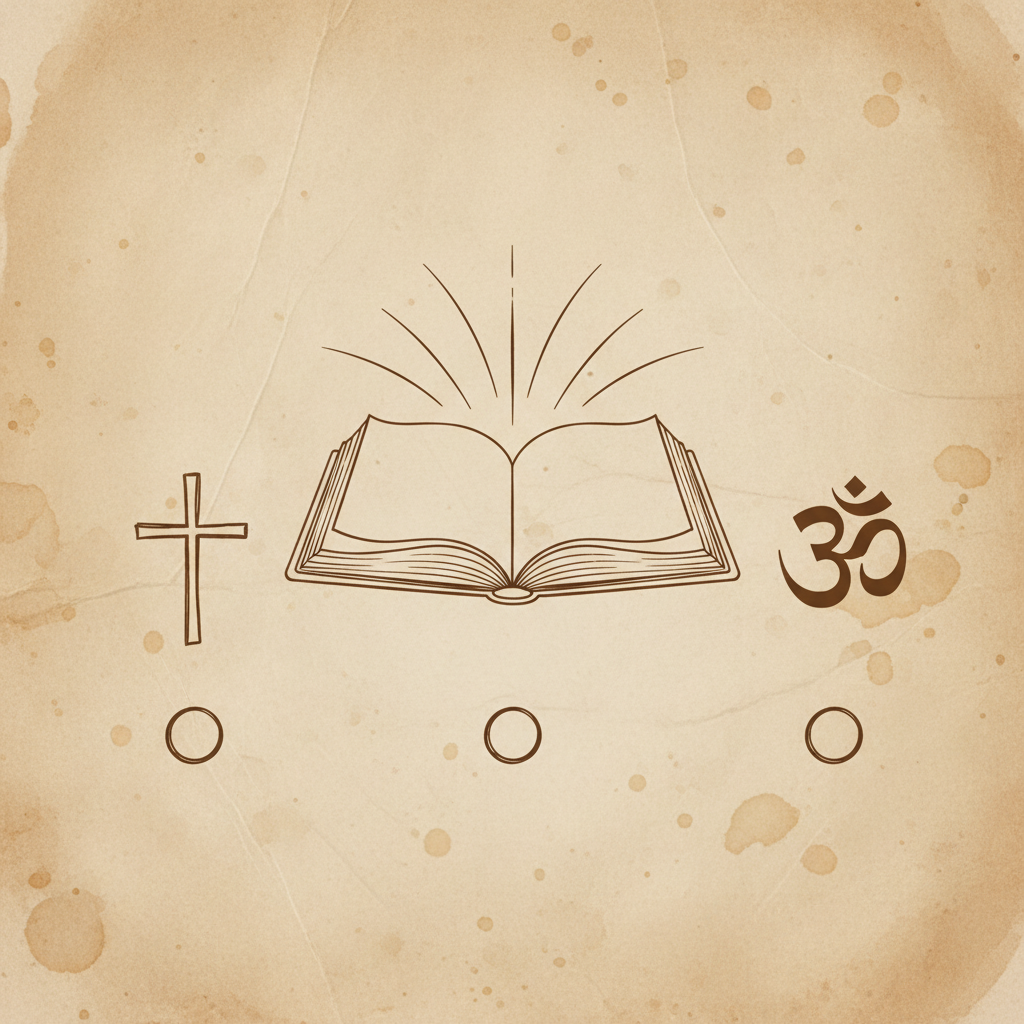
But the short answer is: no, Vedanta is not a religion. It is a means of knowledge—a pramāṇa—that reveals the nature of the self and reality. You don't need to "believe" anything. You need to understand.
What is the difference between religion and Vedanta?
Religion, in general, involves faith, dogma, and devotional practices aimed at a higher being that is "out there." You believe, follow rules, and expect a future reward—whether in this life or after death.
Vedanta operates in a completely different way. It doesn't ask you to believe. It asks you to examine. The proposal is: "Let's investigate together what you are, using logic, experience, and the texts as a guide."
There is no conversion, no baptism, no "accepting" Vedanta. There is study, reflection, and understanding.
What if I am Christian?
Can you study Vedanta as a Christian? Yes. Many of my students are. Vedanta does not compete with Christianity—it operates on another level.
Christianity (and any religion) deals with values, ethics, devotion, and the relationship with God. Vedanta deals with the fundamental nature of reality. These are different levels of investigation.
In fact, many Christian concepts gain depth when viewed through the lens of Vedanta. "The kingdom of God is within you"—isn't that very similar to "tat tvam asi" (you are that)?
What if I am Atheist?
Even better, in a sense. Because the atheist has already discarded the idea of an anthropomorphic God who judges and punishes. Vedanta also discards that.
What Vedanta calls Īśvara is not a bearded old man in the sky. It is the intelligence that permeates and sustains the entire order of the universe—the law of gravity, DNA, the cycle of seasons. This requires no faith. It requires observation.
If you accept that the universe operates according to intelligent and ordered laws, you are already closer to Īśvara than you imagine. Without needing any "faith."
What does Vedanta truly ask of you?
Three things:
- Śraddhā—which is not blind faith. It is the willingness to give credence to the teaching long enough to investigate. Like when you enter a physics class: you don't "believe" the professor. You give credence, investigate, and verify.
- Viveka—discernment. The ability to distinguish what is real from what is apparent.
- Mumukṣutvam—desire for freedom. Not political freedom. Freedom from being held hostage by one's own psychological limitations.
None of these depend on religion.
So why do so many people confuse it?
Because Vedanta was born within the Vedic culture, which also includes rituals, devotion, and religious practices. It's like confusing the university with the building—the knowledge does not depend on the cultural structure that houses it.
Furthermore, in the West, anything that talks about "spirituality" or "God" automatically goes into the "religion" drawer. But Vedanta uses the word Īśvara in a technical, precise way—not devotional.
In practice
You can be Christian, atheist, agnostic, Buddhist, or have no label at all. If you want to understand the nature of yourself and reality, Vedanta is for you.
The only real prerequisite is the desire to know. The rest, the teaching takes care of.
If you want to take the first step, start with the Bhagavad Gita with a qualified teacher. You don't need to believe anything—just investigate with an open mind.
Want to study Vedanta in depth?
Join a Study Group →