Vedanta literally means "the end (anta) of knowledge (Veda)". It is the final portion of the Vedas — humanity's oldest texts — which deals with the knowledge of the nature of the self.
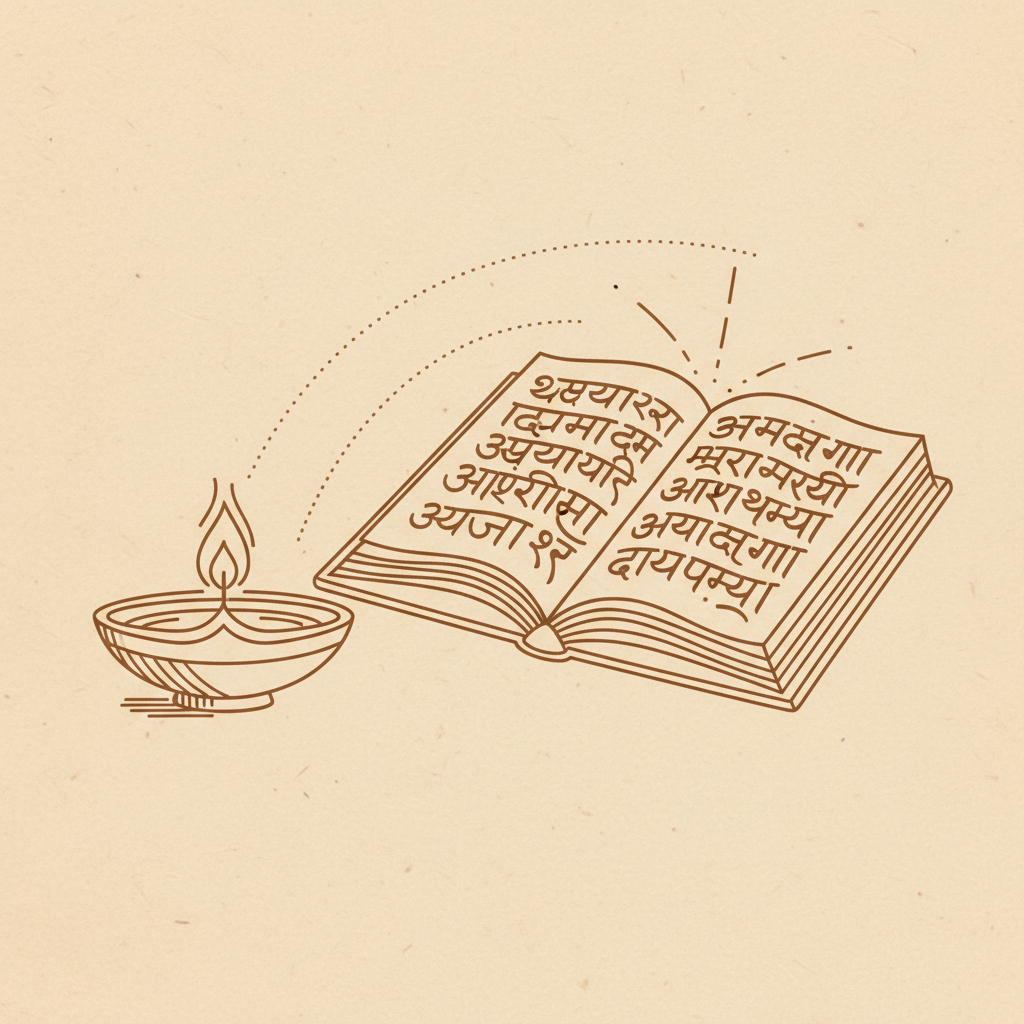
What Vedanta Means
The word is divided into: - Veda — knowledge (from the verb vid, "to know") - Anta — end, conclusion, essence
Vedanta is the conclusion of the Vedas — not chronologically, but in terms of content. While the first part of the Vedas deals with actions (rituals, ethics, devotion), the last part deals with pure knowledge about reality.
Vedanta is Not...
- Philosophy — philosophy speculates; Vedanta reveals
- Religion — it does not require faith, conversion, or rituals
- Meditation — meditation is a tool; Vedanta is the knowledge
- Modern Yoga — postures are preparation, not the end
- Hinduism — Hinduism is culture; Vedanta is universal knowledge
What Vedanta Is
It is a pramāṇa — a valid means of knowledge. Just as eyes are the means to know colors and science is the means to know the physical world, Vedanta is the means to know yourself.

The Message in a Sentence
You are already free, complete, and full (pūrṇa). Suffering comes from not knowing this.
Vedanta adds nothing to you. It removes the ignorance that hides what you already are. Just as the sun doesn't need to be "lit" — it only needs the clouds to dissipate.
How to Access
The study of Vedanta requires: 1. A qualified teacher in the traditional lineage 2. Core texts — Upanisads, Bhagavad Gita, Brahma Sutras 3. Systematic method — śravaṇa, manana, nididhyāsana 4. Student's qualification — desire for knowledge, discernment, discipline
It is not for everyone — it is for those who are ready. And being ready begins with the question: "Who am I?"
Want to study Vedanta in depth?
Join a Study Group →