
India is a real country with real problems — not a spiritual theme park — and understanding this before you go is what separates a transformative trip from a disappointment.
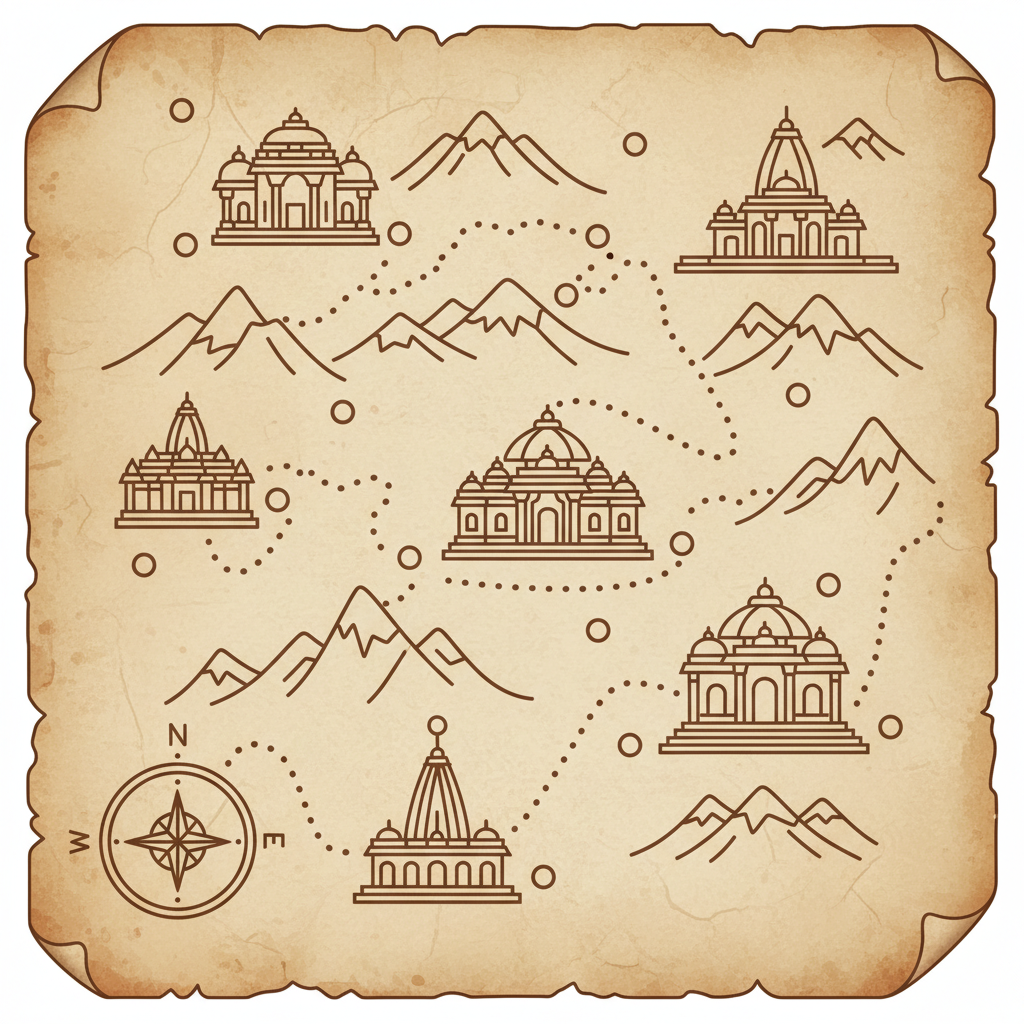
I get this question often: "Jonas, I want to go to India to study. What do I need to know?" And the honest answer is: more than you imagine. Not because India is dangerous or inaccessible, but because the expectations of those who go are usually calibrated by Instagram, Paulo Coelho, or Eat Pray Love.
The real India is something else. Deeper, more chaotic, more human, wiser — and completely different from Western fantasy.
First: why go?
Before planning the trip, define why you want to go. This changes everything — destination, duration, budget, preparation.
Cultural tourism with a spiritual component: Visiting temples, well-known ashrams, sacred places. Two to four weeks. Flexible itinerary.
Serious study of a tradition: Staying in an ashram or gurukulam for months, studying with a teacher. Minimum of three months. Requires prior research on the teacher and lineage.
Personal retreat: Spending time in silence, meditation, reflection. One to four weeks in a specific location.
Most people mix the three — and end up doing none of them well. If you want to study, commit to studying. If you want to sightsee, sightsee without guilt. But don't pretend that tourism is sādhanā (spiritual practice).
Practical matters
Visa
Brazilians need a visa. The e-Visa (electronic) works well for stays up to 30 days. For long stays (study in an ashram), apply for a regular tourist visa or, if possible, a student visa.
Health
- Yellow fever vaccination is mandatory for entry
- Consult a travel doctor for recommended vaccines (Hepatitis A, Typhoid, etc.)
- Bring stomach medication — dietary adaptation takes a few days
- Drink only filtered or boiled water. Always.
Money
The Indian Rupee (INR) is the currency. Credit cards work in big cities, but the interior and ashrams are cash-based. Bring dollars or euros for local exchange. In 2026, 1 USD ≈ 83-85 INR.
Climate
India is huge — the climate varies drastically. Generally: - October to March — best time for most destinations (Indian winter, pleasant temperatures) - April to June — intense summer (40°C+ in the north) - July to September — monsoons (heavy rains)
Destinations for spiritual study
Rishikesh (Uttarakhand)
The "world capital of yoga." On the banks of the Ganges, with dozens of ashrams. Good for an introduction to yoga and meditation. Caution: spiritual tourism has greatly commercialized the place. Choose smaller, less touristy ashrams.
Varanasi (Uttar Pradesh)
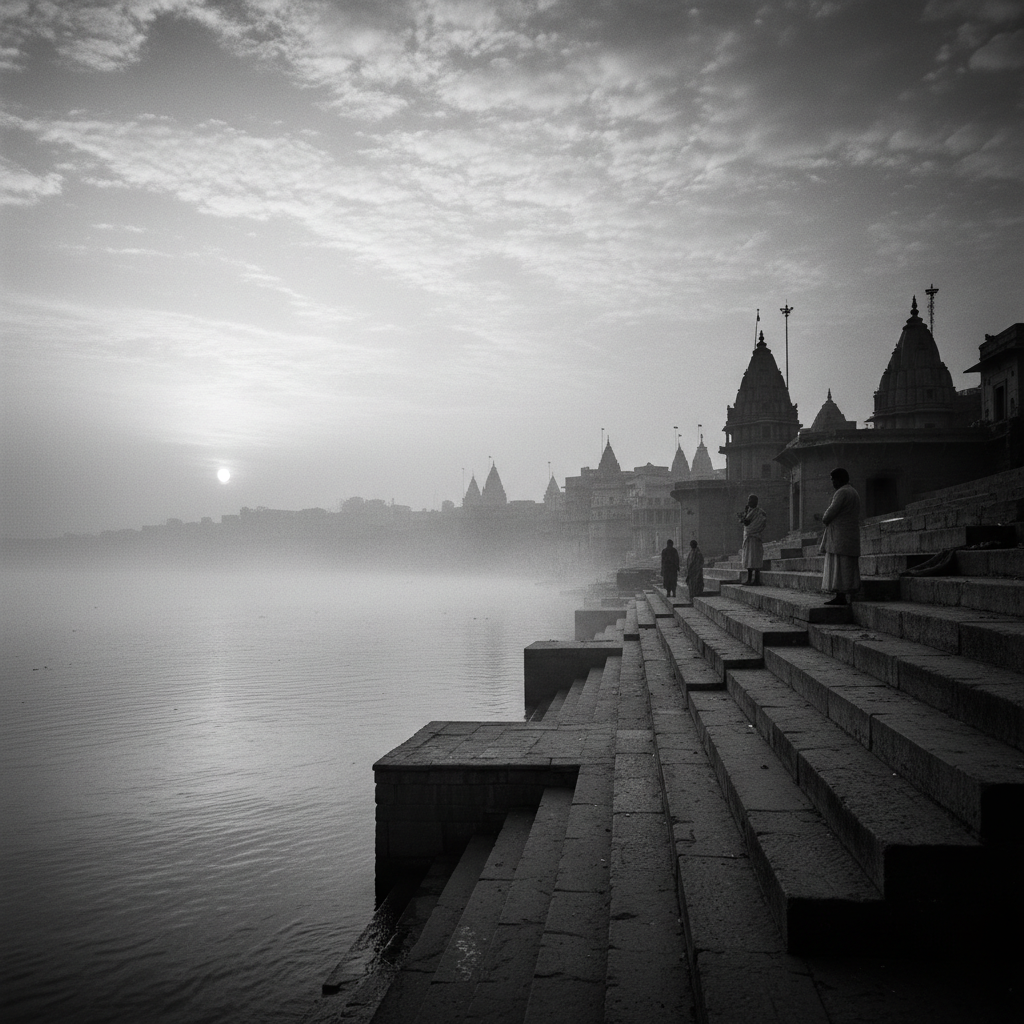
The oldest continuously inhabited city in the world. Intense, chaotic, sacred. Not a place for retreat — it's a place for immersion. The ghats on the Ganges at dawn will change your perspective on life and death.
Tamil Nadu (South India)
For those seeking the tradition of Vedānta and Sanskrit. Traditional study ashrams: Arsha Vidya Gurukulam (Anaikatti), Swami Dayananda Ashram (Rishikesh). The South is calmer, more vegetarian, more traditional.
Tiruvannamalai
Mount Arunachala. Associated with Ramana Maharshi. A place of silence and introspection. Simple, unpretentious, profound.
Dharamsala (Himachal Pradesh)
Seat of the Dalai Lama and the Tibetan community in exile. For those interested in Tibetan Buddhism. Magnificent mountains, cold climate.
Ashrams: what to expect
An ashram is not a spa hotel. It's a place of practice. Expect:
- Early wake-up (4 am-5 am in most)
- Rigid routine — meditation, pūjā, study, karma-yoga (work in the ashram)
- Simple food — vegetarian, sāttvic, at fixed times
- Basic accommodation — shared room, no air conditioning
- Silence — many ashrams have periods of mouna (silence)
- Rules — no alcohol, no smoking, no loud noise, limited phone use
This is intentional. External simplicity aids internal stillness. If you want comfort, stay in a hotel. If you want transformation, accept the discomfort.
How to choose an ashram
- Research the lineage. Who is the guru? What is the tradition? Is there a recognized sampradāya (teaching lineage)?
- Talk to those who have been. Real accounts are worth more than pretty websites.
- Be wary of promises. "Enlightenment in 10 days," "guaranteed awakening" — run away.
- Check costs. Traditional ashrams charge little or nothing. If it's expensive, it's a business, not an ashram.
- Observe the ethics. Does the teacher live what they teach? Is there transparency? Is there respect?
Cultural shocks that will happen
Prepare yourself for:
- Noise. Horns, temple music, crowds. India is sonically intense.
- Visible poverty. It will confront you. Don't idealize ("happy poverty") nor be paralyzed by guilt.
- Different time. "Indian Standard Time" is a local joke. Things happen when they happen.
- Sensory intensity. Colors, smells, tastes — everything is amplified.
- Genuine hospitality. Indians are, on average, extraordinarily welcoming to foreigners.
What NOT to do
- Don't go without researching. India rewards those who prepare and punishes those who improvise.
- Don't idealize. Not every sādhu is wise. Not every ashram is legitimate. Use discernment (viveka).
- Don't disrespect customs. Dress appropriately in temples (shoulders and knees covered). Remove shoes when asked. Ask permission before photographing rituals.
- Don't collect gurus. If you went to study with someone, study. Don't jump from ashram to ashram looking for the "best master." Commitment is essential.
- Don't use drugs. Bhang (marijuana) is legal in some ritual contexts, but it's not spiritual practice. And synthetic drugs are illegal and dangerous.
What to bring
- Light, modest, comfortable clothing (cotton)
- Strong insect repellent
- Power adapter (Type D/M)
- Personal health kit
- Notebook and pen (for study notes)
- Open mind and calibrated expectations
The longest journey
Ultimately, the real spiritual journey is not to India — it's within yourself. India can facilitate this. The land, the tradition, the teachers, the culture — everything conspires for you to stop, look within, and ask: who am I?
But if you don't ask this question seriously, India will be just another tourist destination — beautiful, exotic, and forgettable.
Go prepared. Go with humility. And go willing to be changed by what you find — including what you find within yourself.
Want to study Vedanta in depth?
Join a Study Group →