
Vedanta is the knowledge that concludes the human quest. It's not philosophy, not religion, not a set of beliefs. It's a means of knowledge (pramana) that reveals who you are.
The Origin
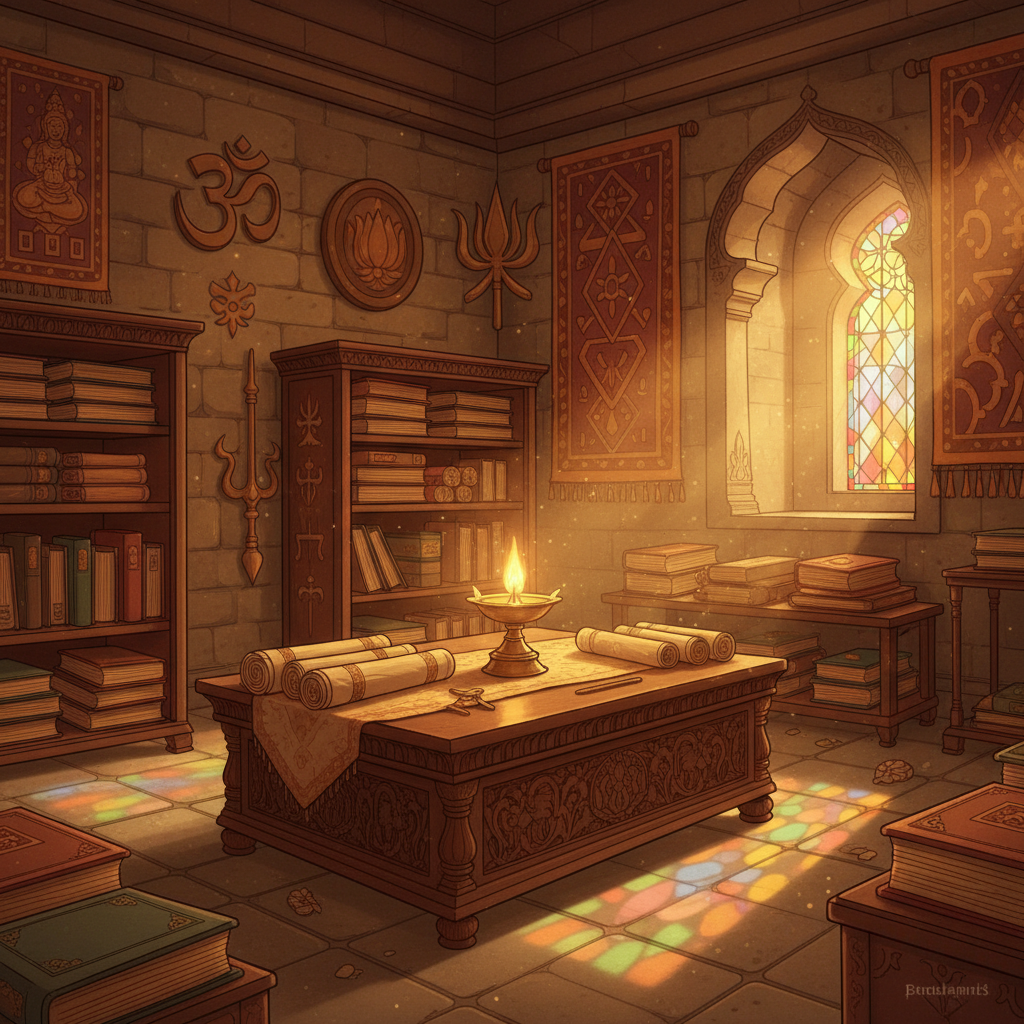
Vedanta comes from Veda (knowledge) + anta (end, conclusion). It's the final portion of the Vedas — the oldest texts of humanity. While the first part of the Vedas deals with actions (rituals, ethics), the last part deals with knowledge about the self.
The Foundational Texts
Vedanta is based on three sources (prasthana traya): 1. Upanisads — the direct revelation about ātman and Brahman 2. Bhagavad Gītā — Kṛṣṇa's teaching to Arjuna on the battlefield 3. Brahma Sūtras — aphorisms that systematize the teaching
The Central Message
In one sentence: You already are what you seek.
Every human being seeks to be free from limitation. Vedanta reveals that this freedom doesn't need to be achieved — it needs to be recognized. Your real nature (ātman) is identical to the totality (Brahman): sat-cit-ānanda — existence, consciousness, fullness.
How to Study
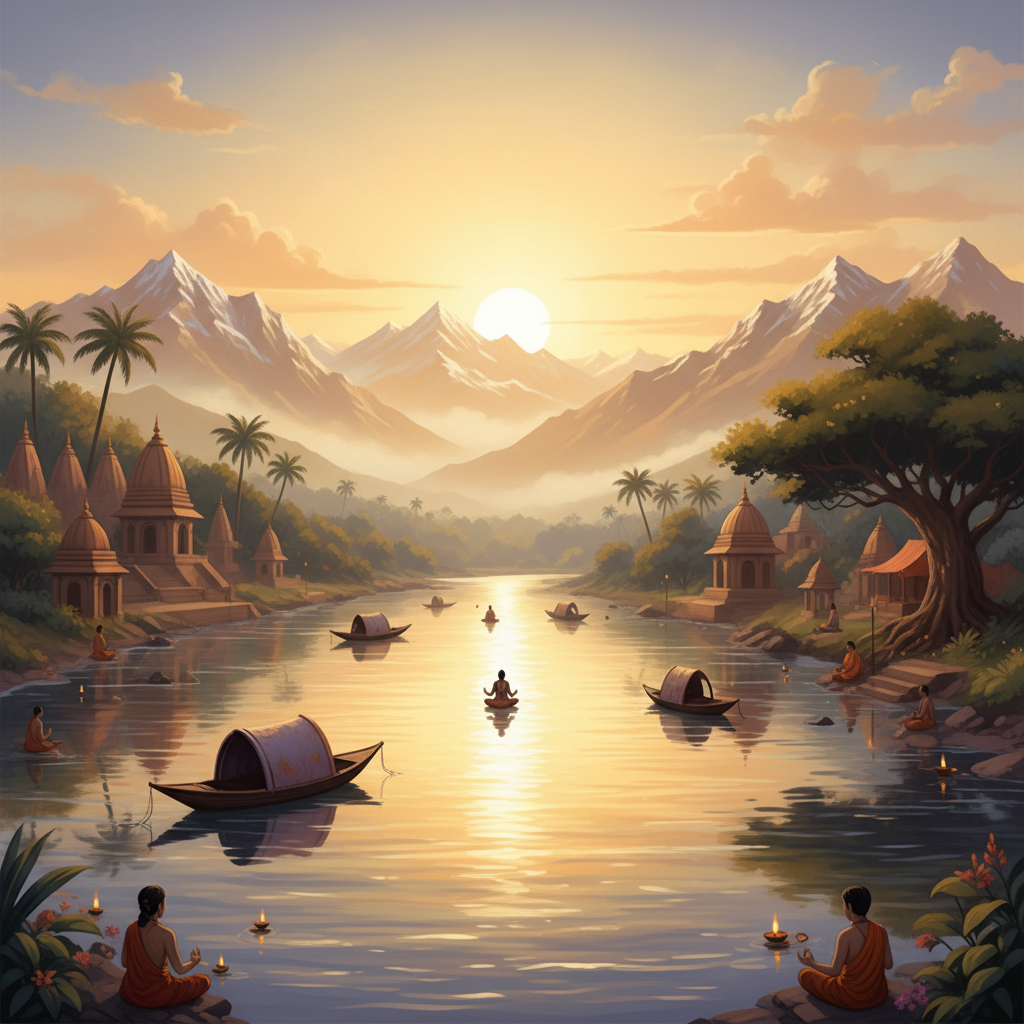
The study follows three stages: 1. Śravaṇa — listening to the teaching with a qualified teacher 2. Manana — reflection to resolve doubts 3. Nididhyāsana — assimilation of the knowledge into daily life
Vedanta is Not...
- Philosophy — philosophy speculates; Vedanta reveals
- Religion — it doesn't require faith or conversion
- Meditation — meditation prepares the mind; Vedanta is the knowledge
- Modern Yoga — āsanas are preparation; Vedanta is the destination
Where to Start
The Bhagavad Gītā is the entry text. But the most important thing is to find a qualified teacher in the traditional lineage (sampradāya) who can transmit the knowledge with the proper method.
Want to study Vedanta in depth?
Join a Study Group →