Raja Yoga – the "royal path" – is the system of yoga described by Patanjali in the Yoga Sutras. It is the yoga of the mind: discipline, concentration, and meditation as the path to liberation.
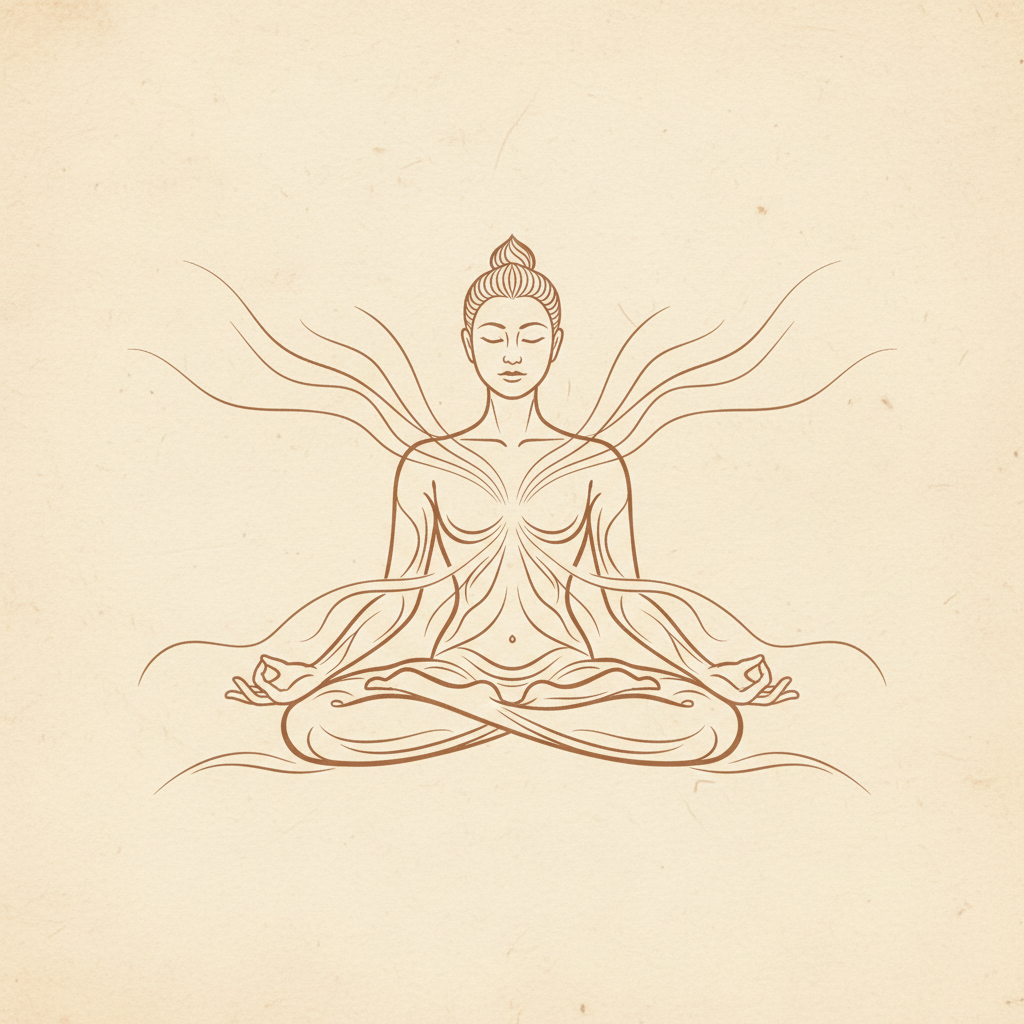
What is Raja Yoga
While Hatha Yoga emphasizes the body and Karma Yoga emphasizes action, Raja Yoga emphasizes the mind. The goal is clear: citta vrtti nirodhah – the cessation of mental fluctuations (Yoga Sutra 1.2).
This is not "stopping thinking." It is developing a mind so stable and clear that self-knowledge becomes possible.
The Eight Limbs (Astanga Yoga)
Patanjali describes eight progressive steps:
- Yama – social ethics (non-violence, truth, non-stealing, continence, non-possessiveness)
- Niyama – personal disciplines (purity, contentment, discipline, study, surrender)
- Asana – a steady and comfortable posture
- Pranayama – breath regulation
- Pratyahara – withdrawal of the senses
- Dharana – concentration on a single point
- Dhyana – meditation (sustained concentration)
- Samadhi – total absorption

Raja Yoga and Vedanta
Raja Yoga prepares the mind. Vedanta liberates the person. They are complementary: - Raja Yoga develops concentration and discipline - Vedanta provides self-knowledge
A disciplined mind (through Raja Yoga) that receives knowledge (from Vedanta) attains mokṣa – ultimate liberation.
Where to Start
Begin with the first two limbs: yama and niyama. Ethics and personal discipline are the foundation of everything. Without them, asana is just gymnastics and meditation is just relaxation.
The royal path begins with the basics: live with integrity.
Want to study Vedanta in depth?
Join a Study Group →