
Bhakti Yoga is perhaps the most misunderstood path. For many, it is synonymous with singing, dancing, and getting emotional in temples. This can be part of it, but bhakti is much more than feeling.
What is Bhakti
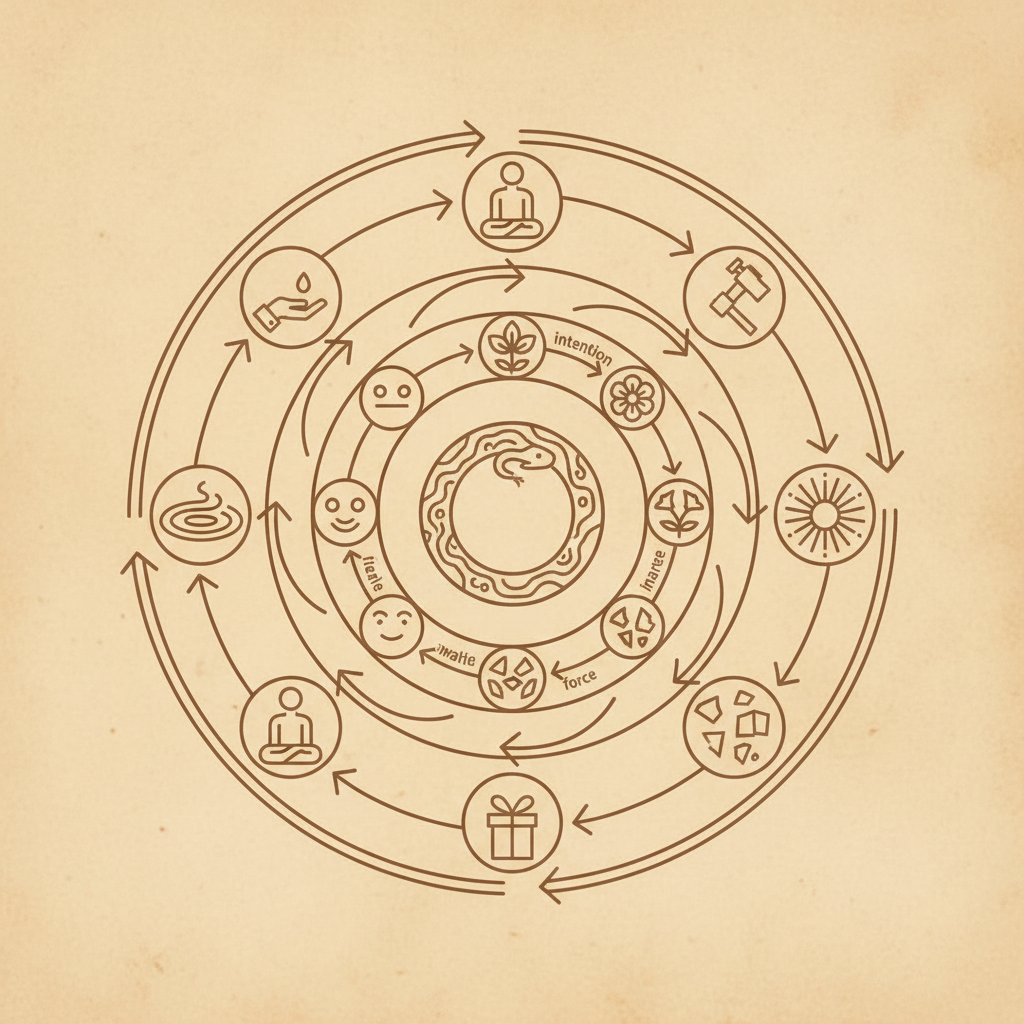
Bhakti comes from the root "bhaj," which means to serve, to participate, to share. Bhakti is an attitude of connection with Īśvara — not based on fear or bargaining, but on understanding.
In the Bhagavad Gītā (18.55), Kṛṣṇa says that it is through bhakti that one knows Brahman. Not by rituals, not by penances — through bhakti.
What Bhakti is NOT
It is not religious fanaticism It is not blind faith It is not emotional dependence on a deity It is not abandoning the use of intellect
Mature bhakti includes viveka (discernment). The devotee does not stop thinking — they think clearly and offer everything to Īśvara.
Bhakti and Karma Yoga
Bhakti is the attitude that sustains karma yoga. When you act and offer the action to Īśvara (īśvara-arpaṇa buddhi), that is bhakti in action. When you receive the result as prasāda (prasāda buddhi), that is also bhakti.
Without bhakti, karma yoga becomes just "doing my best and letting go." With bhakti, karma yoga becomes a form of constant prayer.
Bhakti and Jñāna
There is a false opposition between devotion and knowledge. In Śaṅkara's tradition, bhakti and jñāna are not opposites — they are complementary. Bhakti prepares the mind. Jñāna reveals the truth. And after knowledge, bhakti continues as a natural expression of gratitude.
The mature devotee asks nothing from God. They recognize that everything has already been given.
Understand karma yoga to see bhakti in action.
Want to study Vedanta in depth?
Join a Study Group →