
Breathing and meditation are intimately connected—not by chance, but by design. The mind follows the breath. Calm the breath, and the mind calms.
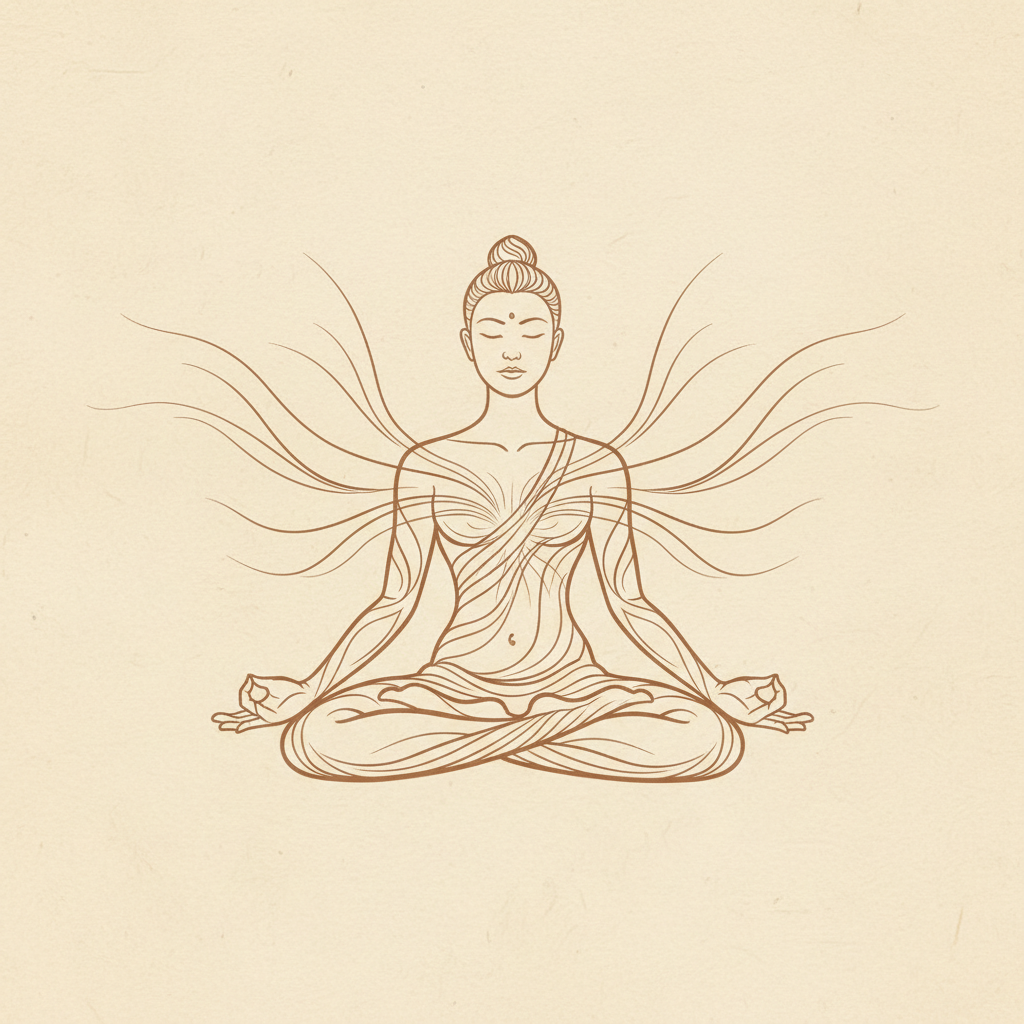
Why Breathing is So Important
In the Vedic tradition, breath (prana) is the link between body and mind. When you are anxious, your breath becomes short and rapid. When you are calm, it becomes long and smooth. But the path is two-way: by controlling your breath, you influence your mind.
This is not theory. It's something you can verify right now: take 5 long, deep breaths and observe what happens.
Basic Technique: Mindful Breathing
- Sit with your spine erect
- Close your eyes
- Inhale through your nose to the count of 4
- Hold to the count of 2
- Exhale through your nose to the count of 6
- Repeat for 5-10 minutes
The longer exhale activates the vagus nerve, the main regulator of the parasympathetic nervous system.

Pranayama: The Science of Breath
Pranayama is not a "breathing exercise." The word comes from prana (vital energy) + ayama (expansion). It is the expansion of vital energy through breath control.
Main techniques: - Nadi sodhana — alternate nostril breathing, balances the cerebral hemispheres - Kapalabhati — energizing breath, cleanses the pranic channels - Bhramari — humming bee breath, deeply calms
Breath as an Entry Point
If you don't know where to start with meditation, start with your breath. It is the most accessible object of meditation—it's always available, requires no faith, and the effects are immediate.
Want to study Vedanta in depth?
Join a Study Group →