
Guided meditation is when someone leads you through the practice, giving step-by-step instructions. It's the most accessible entry point for those who want to start meditating.
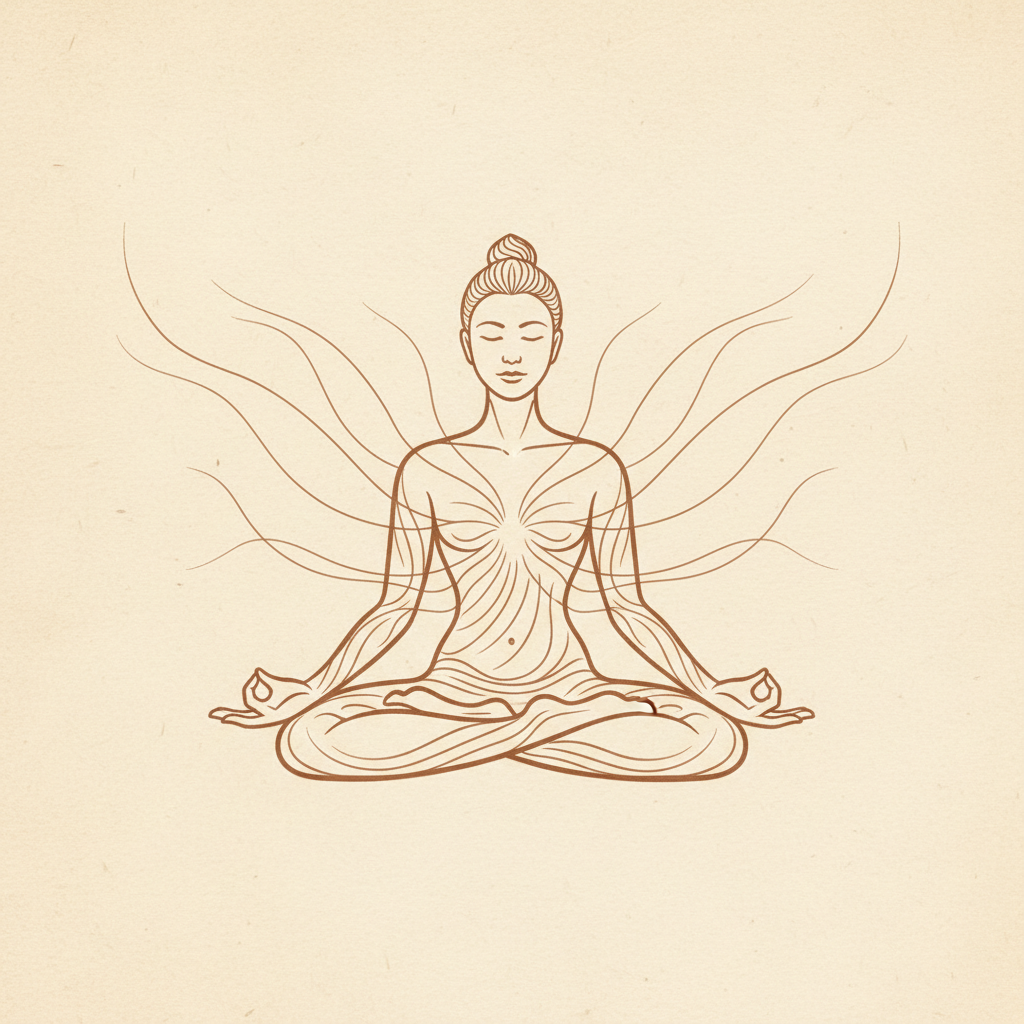
How It Works
You sit, close your eyes, and follow the voice instructions. Simple as that. The voice guides your attention — to the breath, to the body, to sensations — as you learn to direct your mind.
Who Is It For
Beginners who don't know where to start Practitioners who want to vary their routine People who have difficulty meditating alone Those who need structure to stay focused

What to Look For
A good guided meditation has: - Clear instructions — no unnecessary jargon - Adequate silence — pauses for you to practice, not constant talking - No magic promises — beware of "quantum healing" and "DNA activation" - Progression — it goes from simple to more subtle
The Ultimate Goal
Guided meditation is initial training. Like learning to swim with a float. The goal is to develop the ability to meditate alone, without relying on a guide.
In the tradition of Vedānta, meditation (dhyānam) is an individual and silent practice. The guide is the teacher who teaches the method — then, you practice on your own.
Start Now
Sit comfortably, close your eyes, and observe 10 natural breaths. Without changing anything. Just observe. This is already meditation. You don't need an app, music, or a guiding voice to start.
Want to study Vedanta in depth?
Join a Study Group →