
Sleeping well is an art — and like all art, it can be learned. Nightly meditation is the most effective tool to prepare the mind for restorative sleep.
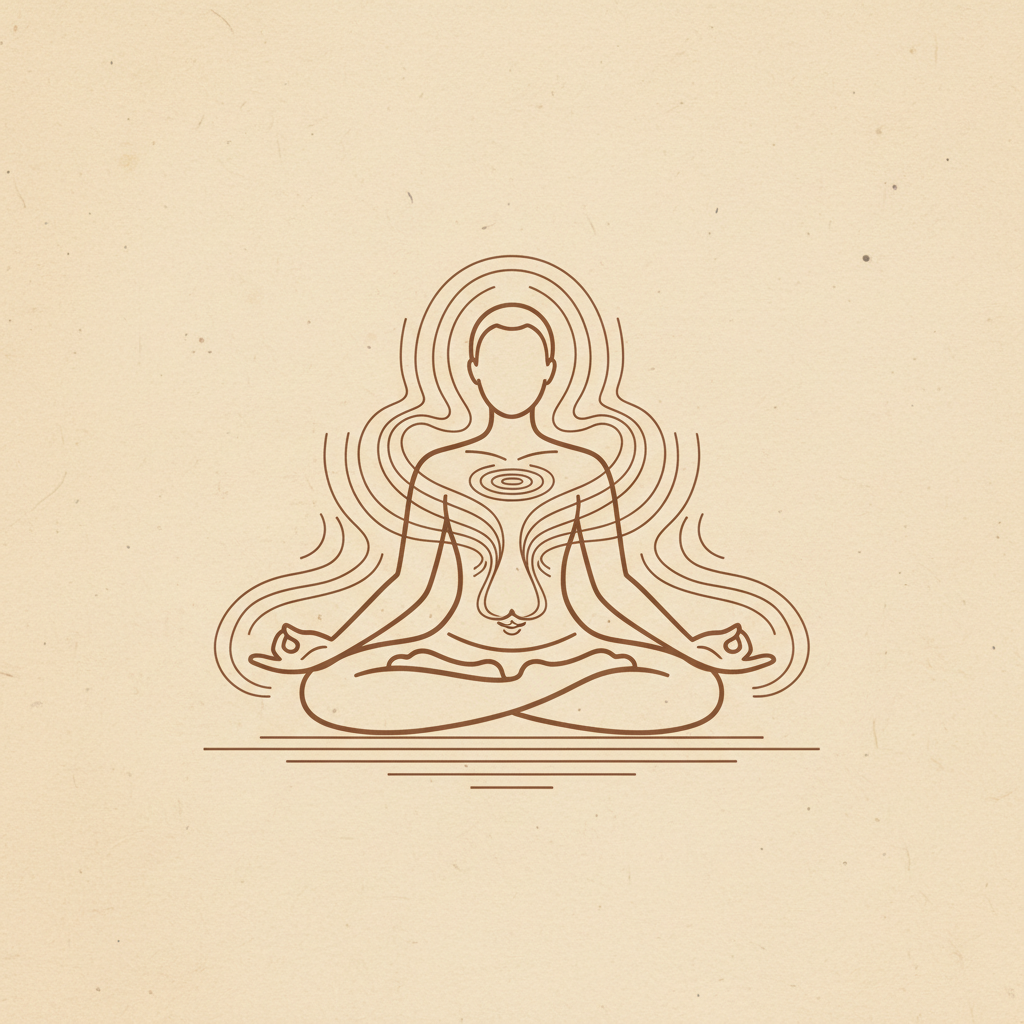
How to practice before sleeping
The technique is simple — and precisely because of that, it works:
- Lie down in the most comfortable position
- Close your eyes and take 3 deep breaths — inhale through the nose, exhale through the mouth
- Mentally scan your body from feet to head, relaxing each part
- Bring your attention to your natural breath — without controlling it
- If thoughts come, let them pass like clouds
There is no goal. There is no "right" or "wrong". The simple act of observing already calms.

What the Vedic tradition teaches about sleep
In the Mandukya Upanisad, three states of experience are described: waking (jāgrat), dream (svapna), and deep sleep (suṣupti). Deep sleep is special — in it, all duality disappears. You experience peace without knowing it.
Meditation is the bridge between the agitation of waking and the peace of deep sleep. It trains the mind to let go — of control, worries, identities.
Why it works
Studies show that meditation reduces cortisol, activates the parasympathetic nervous system, and increases melatonin production. But you don't need studies — just practice for a week and observe.
The mind that meditates before sleeping wakes up differently: clearer, lighter, more present.
Want to study Vedanta in depth?
Join a Study Group →