
Namaste — you've probably heard this word at the end of a yoga class. But its real meaning goes far beyond a casual greeting.
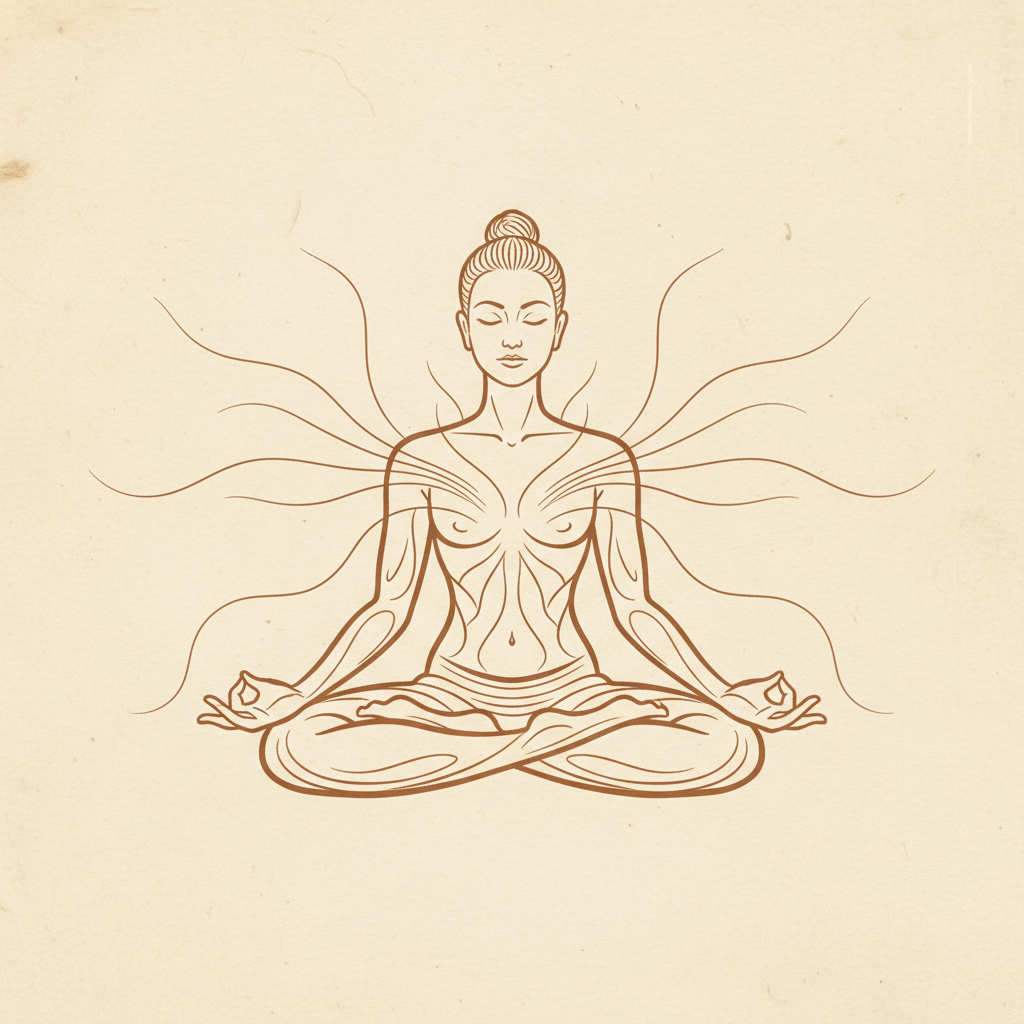
What Namaste Means
The word comes from Sanskrit: namah (reverence, salutation) + te (to you). Literally: "reverence to you" or "I bow before you".
But the deeper meaning is: "The consciousness in me recognizes the consciousness in you." It's not one body greeting another body. It's the ātman recognizing the ātman.
How It's Done
- Palms joined in front of the chest (añjali mudrā)
- Slight bow of the head
- The word "Namaste" may or may not be spoken — the gesture already carries the meaning
Origin and Cultural Context
In India, Namaste is an everyday greeting — equivalent to our "hi" or handshake. But it carries a philosophical weight that Western greetings don't.

Namaste and Non-Duality
In Vedānta, Namaste reflects the view of advaita (non-duality): there are not two — there is only one consciousness (Brahman) manifested in multiple bodies. When you say Namaste, you are recognizing this unity.
It's not performative humility. It's ontological recognition. You are neither superior nor inferior to the other — you are the same.
In the West
Namaste has been adopted by the world of yoga and well-being, but it has often lost its original meaning. It's become a t-shirt decoration, a restaurant name, a hashtag.
If you're going to use Namaste, use it with awareness. Understand what it says. Feel what it says. Or simply smile and say "hi" — there's nothing wrong with that.
Want to study Vedanta in depth?
Join a Study Group →