
I need to start with an important disclaimer: if you are clinically depressed, seek professional help. A psychologist, psychiatrist, medication if necessary. Vedanta does not replace medical treatment.
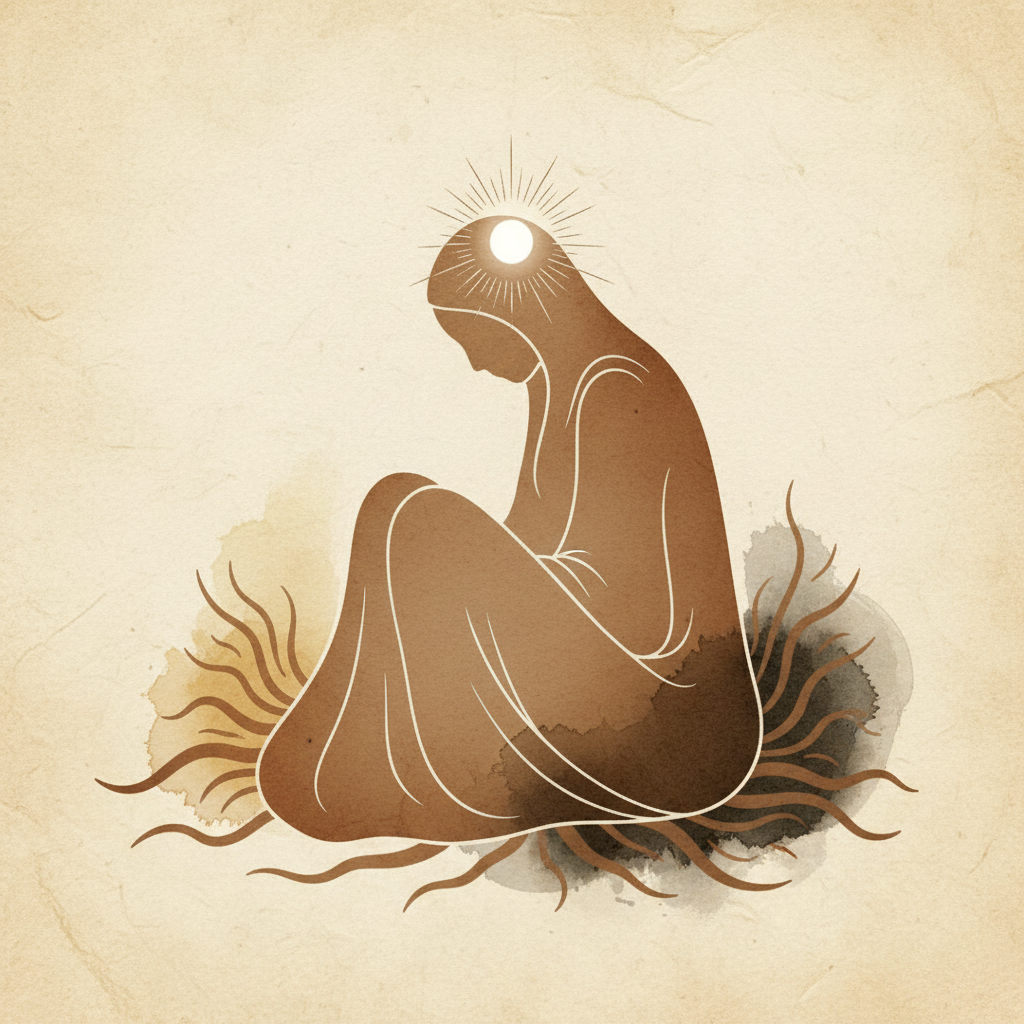
That said, Vedanta offers an understanding of mental suffering that can greatly complement therapeutic work.
What does tradition say about depression?
The texts of Vedanta do not use the word "depression" — it's a modern clinical term. But they describe mental states that correspond perfectly:
Tamas — the quality of inertia, darkness, paralysis. When tamas predominates in the mind, you feel: - Lack of energy - Lack of motivation - Difficulty thinking clearly - Desire to isolate yourself - A feeling that nothing makes sense
Sound familiar?
Modern psychology describes depression in terms of neurochemistry (serotonin, dopamine) and cognitive patterns (repetitive negative thinking). Vedanta looks from another angle: what is the dominant quality of the mind right now?
The three gunas
Vedanta describes three qualities (gunas) that make up all of nature, including the mind:
- Sattva — clarity, lightness, understanding
- Rajas — agitation, desire, anxiety
- Tamas — inertia, confusion, paralysis
Everyone has all three. The proportion changes all the time. And the good news is: you can influence this proportion.

Why the lack of motivation?
The question "why don't I have motivation?" usually hides another: "why does nothing seem worthwhile?"
Vedanta identifies the root of this as premature vairāgya — a kind of disenchantment with the world that is not accompanied by knowledge.
It works like this: on some level, you've realized that external achievements don't bring lasting satisfaction. The new car excites for two weeks. The promotion relieves for a month. The new relationship is amazing for six months. Then, dissatisfaction returns.
This perception is correct. Vedanta would confirm: external objects cannot give fullness to one who is already full.
But when you have this perception without having the knowledge of Vedanta, the result is nihilism. "Nothing works, nothing matters, why should I bother?"
The way out
The way out is not to "force yourself" to be motivated. It's to understand what's happening.
1. Take care of the body. Tamas increases with sedentary lifestyle, heavy food, lack of sleep, and lack of routine. Before any philosophical investigation: sleep well, move your body, eat consciously. This is not superficial — it's fundamental.
2. Reduce rajas. Excessive stimulation — social media, news, compulsive entertainment — agitates the mind. And chronic agitation collapses into tamas. It's a cycle: anxiety → exhaustion → paralysis → more anxiety.
3. Cultivate sattva. Meditation, study, company of clear people (satsang), nature, silence. Not as a "spiritual obligation" — as mental hygiene.
4. Understand dissatisfaction. The dissatisfaction you feel is not a sign that something is wrong with you. It's a sign that you are looking in the wrong place. The fullness you seek outside is already within you — as your own nature (ānanda).
Vedanta and therapy: allies, not competitors
A good therapist helps you understand emotional patterns, process trauma, and develop regulation skills. This is essential.
Vedanta offers something that therapy generally doesn't reach: an answer to the existential question. "Who am I?", "What is the meaning of all this?", "Is it possible to be genuinely at peace?"
Many of my students do therapy AND study Vedanta. The two complement each other beautifully.
What not to do
- Do not use Vedanta to deny emotions. "I am ātman, I don't need to feel this" is spiritual bypassing, not wisdom.
- Do not blame yourself for being in tamas. The gunas fluctuate. You did not "choose" to be depressed.
- Do not replace treatment with study. If you need medication, take it. If you need therapy, do it. Vedanta works on the existential level — not the neurochemical.
The perspective that changes everything
Depression says: "this is you. You are this dark mind, without energy, without meaning."
Vedanta says: "you are not the mind. The mind is in tamas now. But you — the consciousness that illuminates even darkness — remain untouched."
This distinction does not cure depression. But it takes away its power to define you. And that, sometimes, is the first step out.
Want to study Vedanta in depth?
Join a Study Group →